Build a one-folder crash record
Published by Portsmouth Accident & Injury Center.
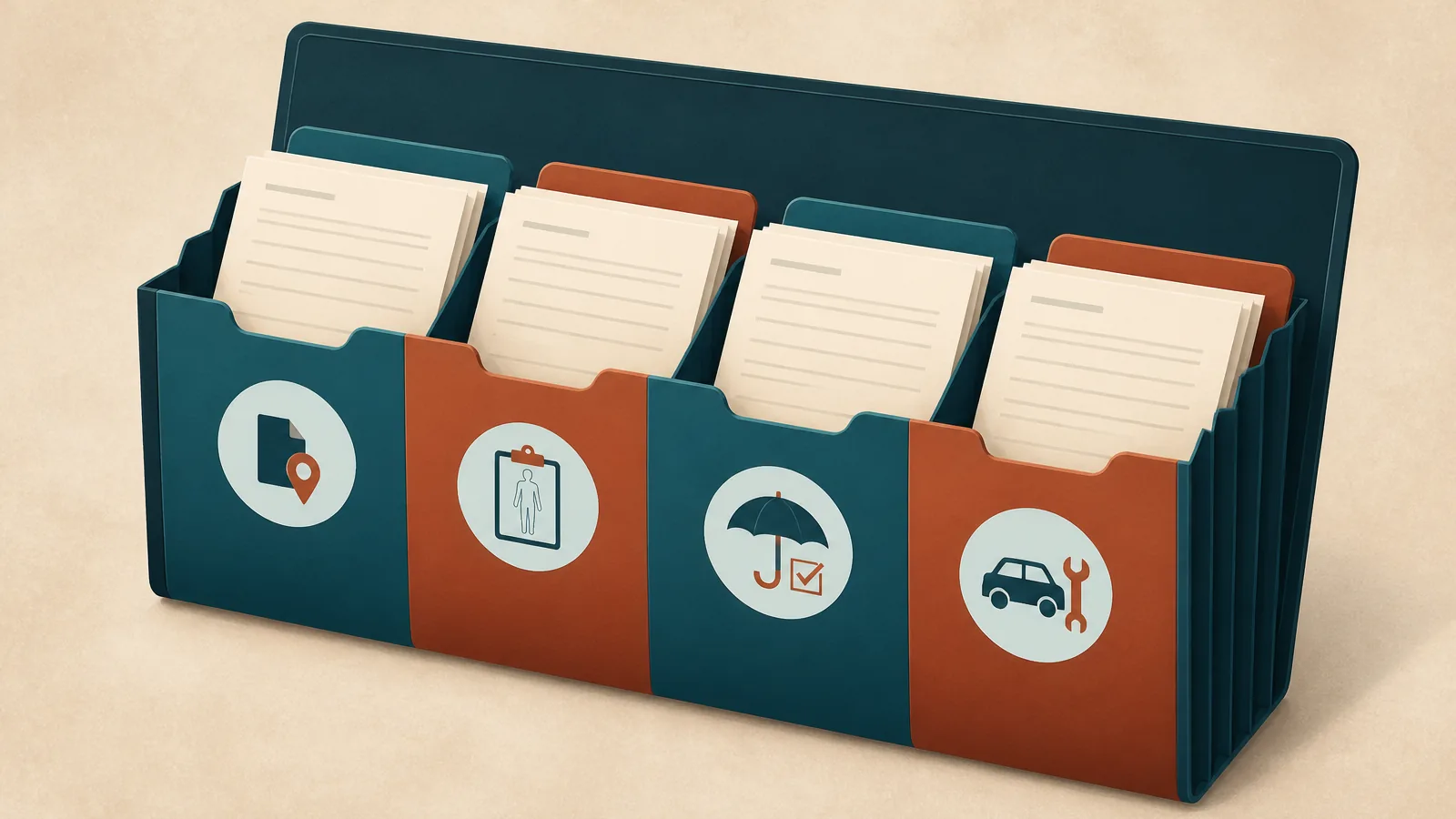
Why one folder works better than memory
In the first week after a collision, people repeat the same three sentences: “I think I saved that,” “It might be in my email,” and “I know I wrote the number down somewhere.” That is not a character flaw. It is what happens when paperwork arrives from a police agency, a clinic, an insurer, a tow yard, and a repair shop in the same few days.
A single folder removes the search step. It also prevents a quieter problem: mixing sources together until nobody can tell what came from where.
Eight sections that keep the crash organized
You do not need a legal binder. Use these eight sections and keep each item in the section it belongs to.
- Event details: your own short account, photos, location, road and weather conditions, and who was present.
- Law enforcement: agency name, officer information, report number, and the report itself once it is available.
- Vehicle: photos, tow receipt, storage information, repair estimates, rental paperwork, and total-loss documents.
- Insurance: claim number, adjuster name and phone, letters, requested forms, and your declarations page.
- Health care: discharge instructions, provider names, appointment dates, medication instructions, imaging notes, and bills.
- Work: missed time, restricted duty notes, and communication with your employer.
- Expenses: transportation, mileage, out-of-pocket costs, and receipts.
- Contacts and call log: every call, with date, time, who you spoke with, and what they said.
Keep the sources separate on purpose
This is the part most checklists skip. A crash file feels tidier when everything blends together, and that is exactly the problem.
- A crash report is an event record, not a medical diagnosis.
- A medical record documents history, examination, and care, not fault.
- An insurance letter reflects a claim decision, not a clinical opinion.
- A repair estimate describes vehicle damage, not injury severity.
When those four sources stay distinct, you can answer questions accurately. When they blur, people start quoting a repair estimate as if it settled a health question.
Name files so the folder sorts itself
Use a date-first filename: YYYY-MM-DD, then a short description, such as 2026-07-28-portsmouth-police-report.pdf or 2026-07-30-urgent-care-discharge.pdf.
Date-first naming sorts chronologically without any extra system, and it makes gaps obvious. If you scan or photograph a page, capture the full page, including the date and the issuing organization. A cropped screenshot of the middle of a document is often useless later.
Getting the Ohio crash report
If the crash was investigated, the report may become available through the state search tool. Availability and timing depend on the reporting agency. Ohio Traffic Crash Report search(opens in a new tab). For a walkthrough, read Ohio crash report guide.
Keep a call log, not a memory
For each call, note the date, time, phone number, and the name of the person you spoke with. Add any claim or reference number, the answer in their words, and the next step.
If the answer matters, ask whether it can be provided in writing. A written instruction is far easier to follow than a recollection of a rushed phone call three weeks later.
Protect the sensitive material
Medical records, insurance identification, and identity documents deserve more care than a tow receipt. Store them securely, share them only through channels the recipient approves, and do not send them through a public website form.
The scheduling form on this site is for basic appointment contact only. It is not a secure channel for medical records, insurance cards, identification, or crash documents.
Review the folder for ten minutes each week
Add anything new, rename anything unclear, update the call log, and note any question you still need answered. Ten minutes a week keeps the folder useful. Zero minutes a week turns it back into a pile with a nicer name.
The Ohio crash report guide covers requesting the record itself, insurance and MedPay covers the coverage section, and what to do after a Portsmouth crash covers the first days.
Related reading
Ohio crash reports
Learn where Portsmouth and Scioto County crash reports are filed, how to search for one, and how to read common report fields.
Read the guideSeven insurance-call questions worth writing down
Write down these seven questions before calling the insurer about an Ohio collision, MedPay, vehicle inspection, and claim documents.
Read the articleHelpful Portsmouth and Ohio resources
Use official agencies, hospital information, practical checklists, and visit guides selected for Portsmouth-area readers.
Read the guideThe first 72 hours after a Portsmouth crash
Follow a practical timeline for safety, reports, insurer calls, symptom notes, and decisions that can wait.
Read the article