Portsmouth, Ohio · 719 Chillicothe Street
Hurt After a Portsmouth Car Accident? Get Evaluated Today.
A crash can leave you with a stiff neck, an aching back, a headache, or simply the feeling that something is not moving the way it did before. At Portsmouth Accident & Injury Center, the first job is to understand what changed. We evaluate the muscle-and-joint side of the problem, explain the findings in plain English, and tell you when another kind of medical care should come first.
Call to ask about today’s availability. If this is an emergency, call 911.

- Call (740) 876-8394
- 4.9 from 11 Google reviews(opens in a new tab)
- Accident-focused records
Accident care and everyday chiropractic care in Portsmouth
This is a chiropractic office with two clear lanes of care. One is for people whose symptoms began after a car accident. The other is for everyday neck pain, back pain, headache patterns, joint stiffness, and movement problems that did not begin in a crash.
The history is different, but the basic question is the same: what changed, what does the exam show, and what is the sensible next step? You do not need to diagnose yourself before calling. Tell us what is harder now, whether that is turning to check traffic, getting through a workday, sleeping comfortably, or getting out of the car without thinking about your back.
Start with the guide that matches your question.
Car accident care in Portsmouth
How the office evaluates non-emergency symptoms after a collision and documents the visit.
Start with accident careChiropractic care in Portsmouth
How the office approaches everyday neck, back, headache, joint, and posture concerns.
See everyday chiropractic careSymptoms after a crash
The symptom guide that best matches what changed after the collision.
Find your symptomWhat to do after a crash
A practical checklist for safety, photographs, reports, insurance calls, and health records.
Work through the checklist
One crash can create four different questions
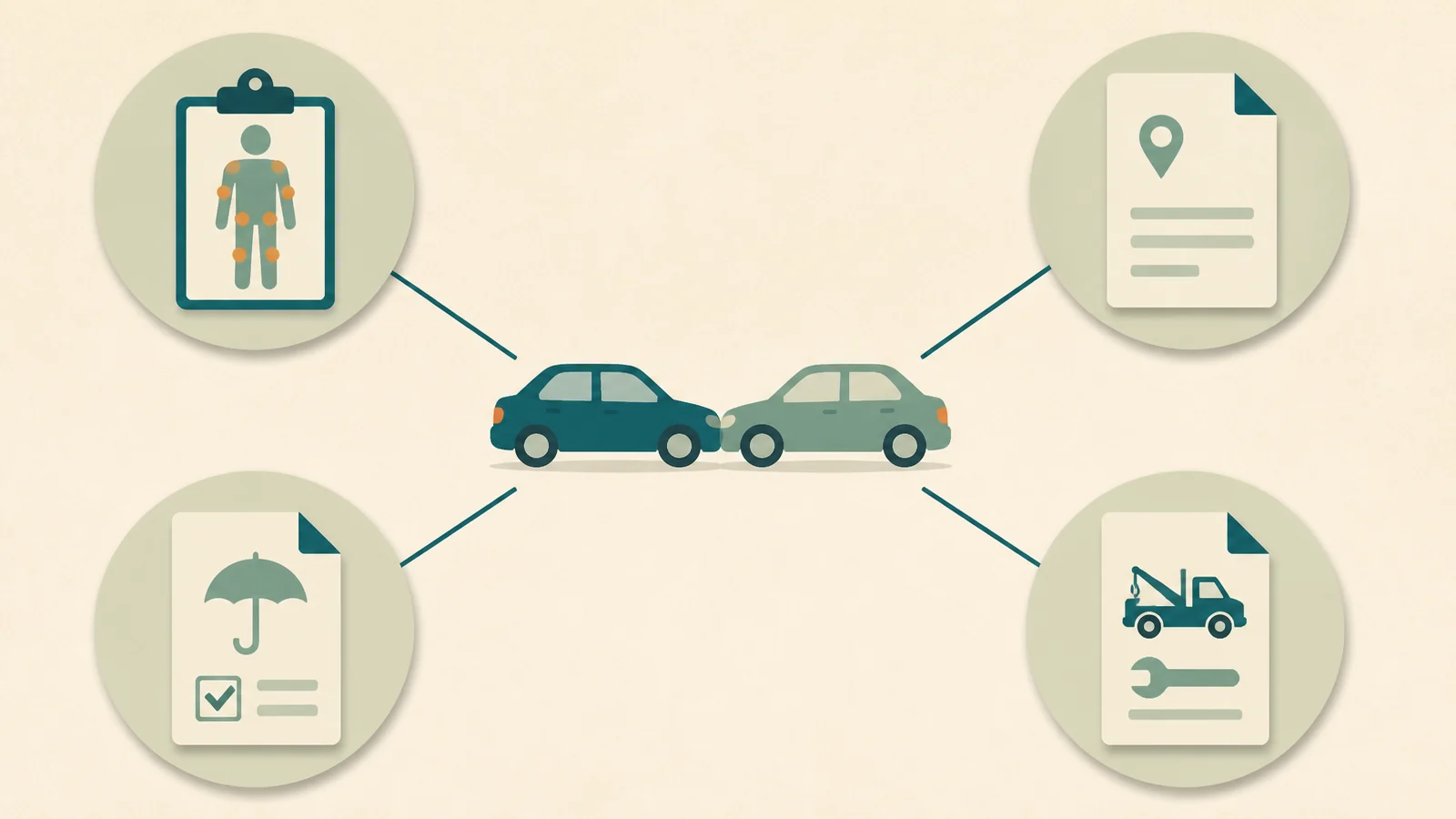
A single collision can create four separate tracks at once. The police record asks what was documented at the scene. The health-care record asks what changed in your body and what the examination found. The insurance file asks what the policy and claim process will pay. The repair file asks what happened to the vehicle. Mixing those tracks is where a lot of confusion starts.
What changed, what does the examination show, and what care setting fits?
Which agency documented the event, and where is the official report kept?
Which coverage applies, what are the limits, and what does the carrier need?
Vehicle question
What did the tow, repair, or total-loss process document about the vehicle?
This office works on the health-care track. The other records can provide context, but none of them replaces the clinical history and examination.
What happens during an accident-focused evaluation
An accident-focused evaluation connects the crash to what you are experiencing now. We want to know how the impact happened, when symptoms appeared, what normal activities became harder, and what previous care you have already received. The examination then helps determine whether the problem fits chiropractic care or needs a medical referral.
- The visit reviews how the collision occurred and how you were positioned.
- The clinician asks when each symptom began and how it has changed.
- You describe activities that are harder now, such as sleeping, driving, lifting, sitting, or turning.
- The history includes emergency, hospital, urgent-care, imaging, or other care already received.
- The examination helps determine whether the concern fits the office’s scope or needs a referral.
If you want the full walk-through, the car accident care page explains the visit in detail and the first-visit guide covers the exam itself. If you still need the collision record, use the Ohio crash report guide. When a possible head injury or another emergency warning sign is present, medical care comes first.
You should receive a clear explanation of the findings
You should be able to describe your symptoms without being dismissed — and without being pushed toward a diagnosis. We listen to the whole story, examine you, and explain what the findings do and don’t show.
Care is suggested only when the findings support it. Sometimes the honest answer is that a medical check, imaging, or another provider fits better. You’ll hear that plainly, too.
Everyday chiropractic care for neck, back, headache, and joint concerns
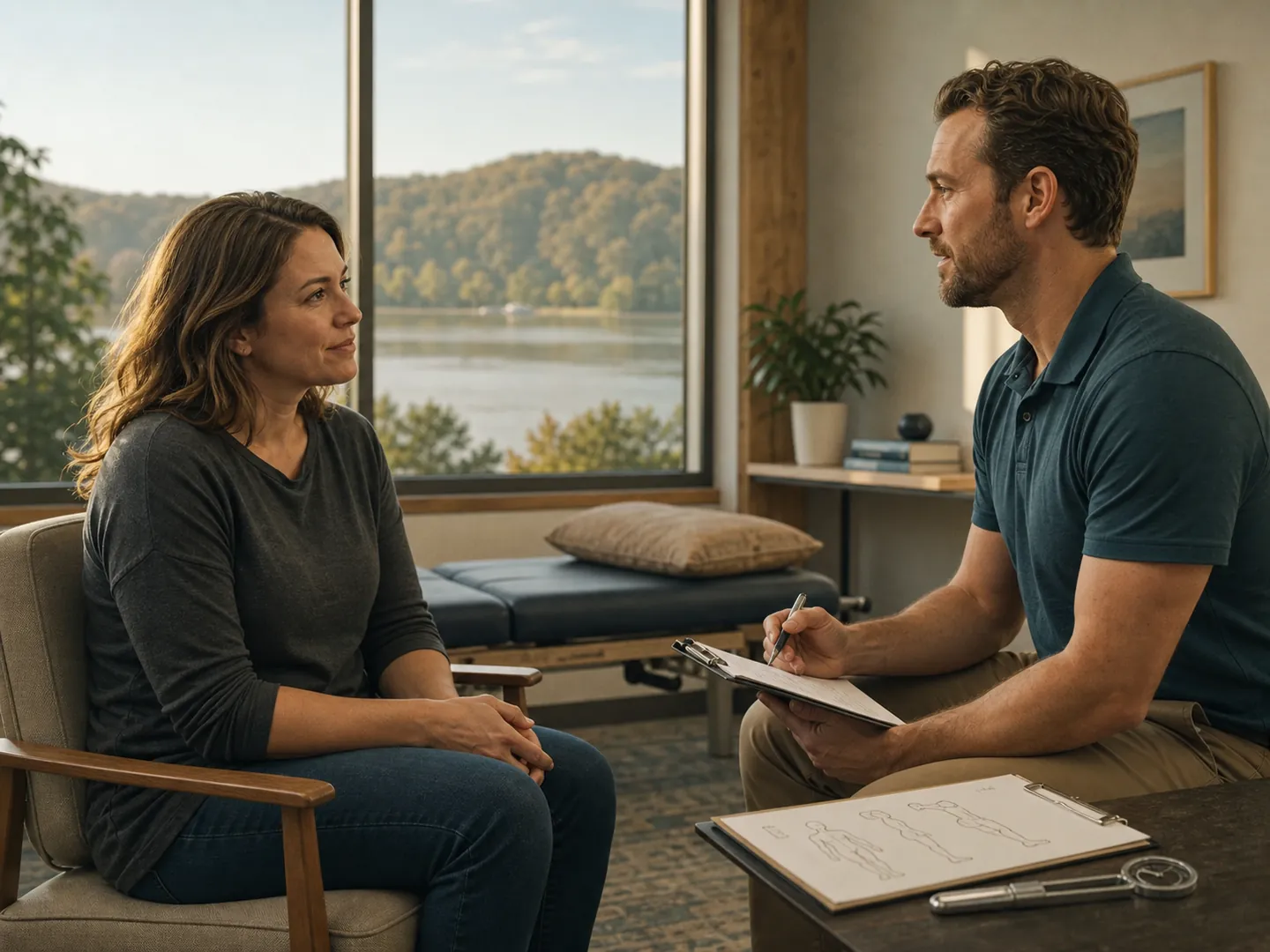
Not every sore neck or painful back has an accident behind it. Long drives, lifting, work positions, exercise, old injuries, sleep, and ordinary wear on the body can all change how you move and feel. An everyday visit starts with the pattern: when it began, what makes it better or worse, and what you can no longer do as comfortably as before.
- Neck pain
- Back pain
- Headaches and neck tension
- Joint movement and posture
- What happens at a chiropractic visit
For some musculoskeletal concerns, chiropractic care may be one conservative option. The National Center for Complementary and Integrative Health(opens in a new tab) reviews the evidence for spinal manipulation and notes that results vary and health history matters for safety. That is why the examination and an informed conversation come before a care decision.
What to bring to the first visit
Bring what you already have. You do not need a perfect file before making the first call. After a crash, useful items can include your photo ID, claim or insurance details, the report number if one was issued, and records from care you have already received. For an everyday complaint, a medication list, relevant reports, and a few notes about what changes the problem are usually more useful than a complicated pain diary.
The website form is for contact and scheduling basics only. Share medical details in a direct conversation with the office rather than placing diagnoses, medical narratives, Social Security numbers, or policy IDs into the form.
Frequently asked questions
Visit Portsmouth Accident & Injury Center at 719 Chillicothe Street
Portsmouth Accident & Injury Center is at 719 Chillicothe Street, across from Kroger and near the Portsmouth Floodwall Murals. The office is open Monday through Thursday, 9:00 AM to 1:00 PM and 2:00 PM to 6:00 PM, and is closed Friday through Sunday. Call (740) 876-8394 to ask about current availability.
The office also serves people coming from New Boston, Sciotoville, Wheelersburg, West Portsmouth, and other nearby communities. The areas guide has route details. If your concern did not begin in a crash, start with the Portsmouth chiropractic care guide. If it did, the accident symptom guides and the what-to-do-after-a-crash guide are the better starting points. Parking notes and the callback form are on the contact page.
Open directions in Google Maps(opens in a new tab)
Accident-focused chiropractic evaluation and documentation in Portsmouth, Ohio.
Not sure whether a chiropractic visit fits?
Call (740) 876-8394 and describe what changed in your own words. You do not need a diagnosis before you call. We can tell you what to bring, and if another kind of provider should see you first, that should be clear before you make the trip. Prefer a callback? Use the scheduling form for contact basics.
This page provides general information. It cannot diagnose an injury or replace emergency or medical care.