Concussion warning signs after a car accident
CDC concussion symptoms and danger signs
The CDC concussion page(opens in a new tab) separates possible symptoms from danger signs. Possible symptoms can involve headache, dizziness, nausea, vision, balance, memory, sleep, or mood. Light and noise can also feel worse than usual. Danger signs require urgent action.
Symptoms may be noticed by the injured person or by someone else. If a person seems more confused, cannot be woken normally, or has a seizure, do not wait for a clinic appointment. The same is true for any other danger sign.
Concussion can occur without a direct head strike
A forceful hit to the body can move the head and brain rapidly. This is why the event history matters, even if no one remembers hitting the dashboard or window.
This statement does not diagnose a concussion. It explains why a medical assessment may be appropriate.
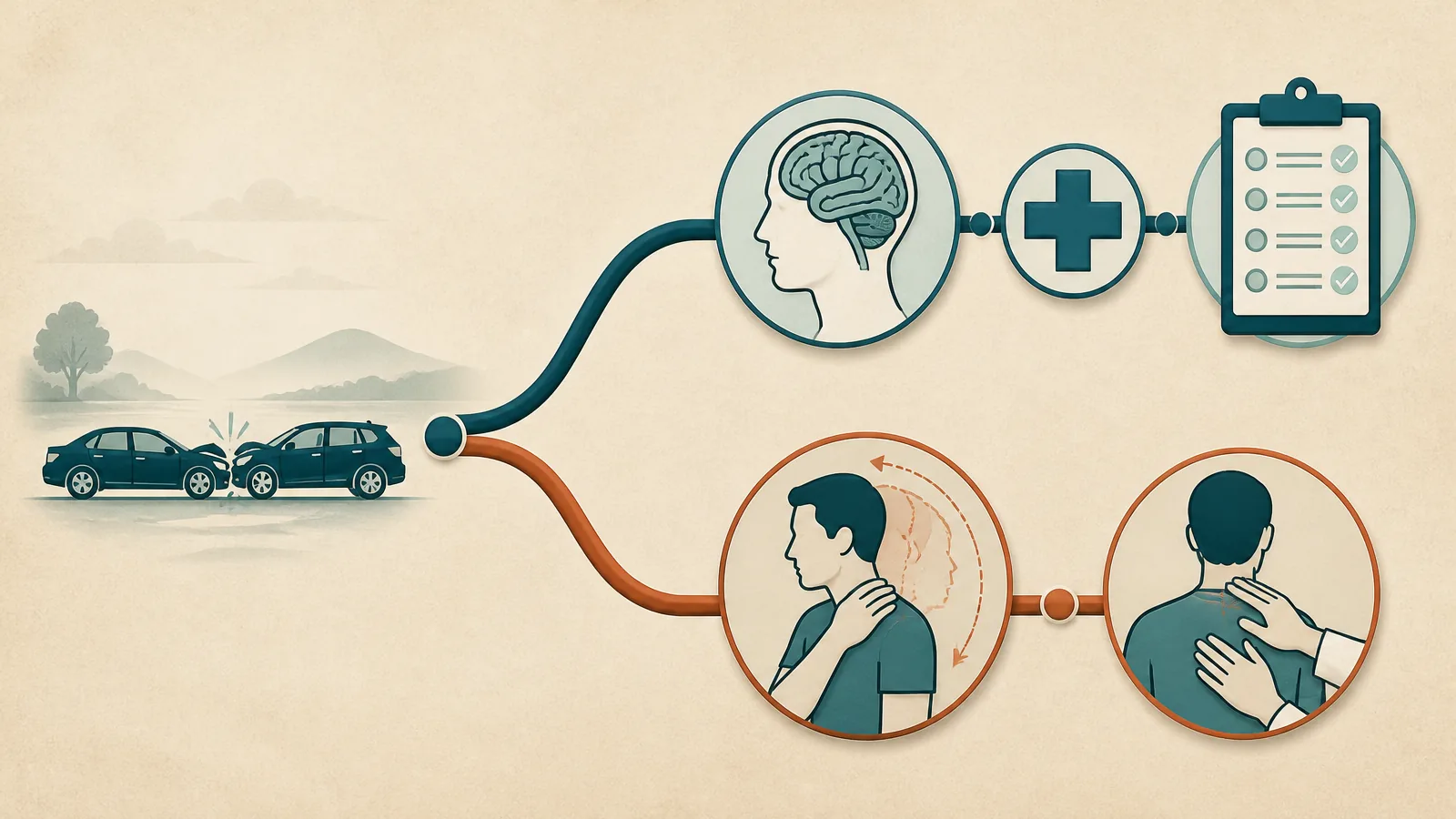
Two tracks can exist after the same crash
A collision can raise a head-injury question and a separate neck or muscle-and-joint question at the same time. Those questions should not be collapsed into one explanation.
- Head-injury track: concussion symptoms, danger signs, and return-to-activity decisions belong with medical care.
- Musculoskeletal track: neck stiffness, movement loss, or other muscle-and-joint symptoms can be considered after urgent medical questions are addressed.
One track does not rule out or explain the other.
What to tell the medical provider
- Time and type of collision.
- Loss of consciousness, even if brief or uncertain.
- Memory gap.
- Vomiting.
- Headache pattern.
- Dizziness, balance, or vision change.
- Confusion, slowed responses, or unusual behavior.
- Medication, especially blood-thinning medication.
- Any worsening after the scene.
Do not use note-taking as a reason to delay emergency care.
Chiropractic care does not diagnose or treat a concussion
Portsmouth Accident & Injury Center may check separate muscle or joint concerns once urgent and medical issues have been handled, the way car accident care works for other post-crash complaints. It does not replace an emergency department. It also cannot diagnose a concussion through a web form or promise post-concussion care.
Use headaches after a crash for more on symptoms. See what to do after a crash for the local checklist. If the belt line also hurts, chest and rib pain and shoulder and seat-belt injuries go further.
Frequently asked questions
Follow the medical instructions you were given first. Once that question is settled, the symptom index covers the muscle-and-joint side and what to expect at a first visit explains what this office can review.
After the medical question is answered, we're here for the rest.
This office does not diagnose or treat concussion, and it will not pretend otherwise. But if you are left with neck stiffness or another muscle-and-joint change once a medical provider has cleared the head-injury question, call (740) 876-8394 and describe it. Prefer to be called back? Request a callback for scheduling basics.
Related guides
Headaches
Learn which post-crash headache signs require medical care and when neck-related evaluation may be considered after urgent concerns are addressed.
Read the guideWhat to do after a crash
Follow a Portsmouth-focused checklist for safety, information exchange, photographs, reports, insurance calls, and health records.
Read the guideChest and rib pain
Chest pain after a crash can be urgent. Learn the emergency signs, what to report, and when a later musculoskeletal question may be appropriate.
Read the guideShoulder and seat belt injuries
Notice changes in shoulder movement, belt-area soreness, bruising, chest symptoms, and breathing after a crash.
Read the guide
Sources and further reading
- CDC concussion signs and symptoms(opens in a new tab) — The CDC explains common concussion symptoms and danger signs that require emergency attention.
- Southern Ohio Medical Center(opens in a new tab) — SOMC publishes current information about hospital, emergency, urgent-care, and other local medical services.
This page provides general information. It cannot diagnose an injury or replace emergency or medical care.