Insurance and MedPay after an Ohio car accident
Three questions, three different decision makers
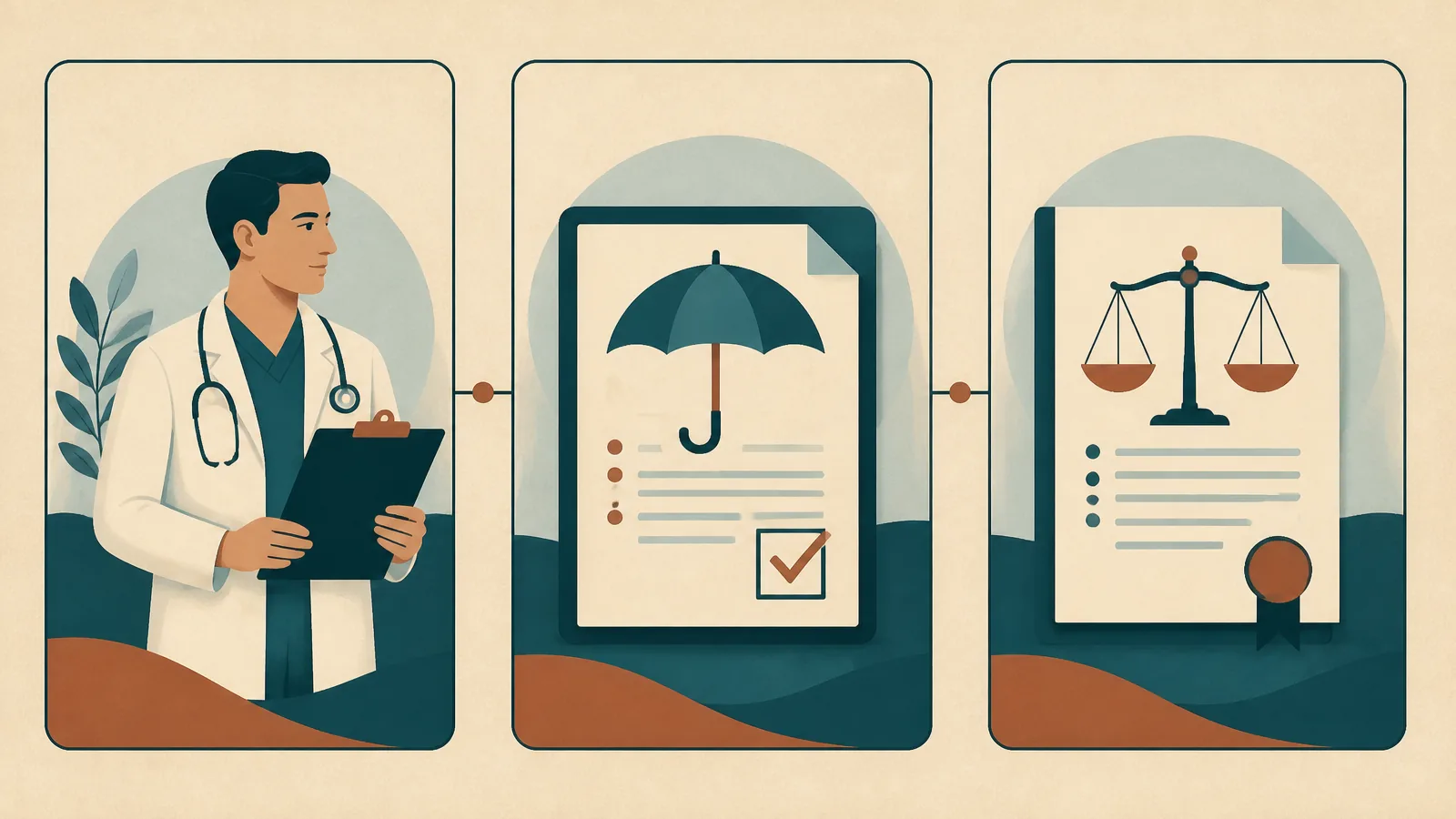
After a crash, people often ask one person to answer three different questions. Keeping them separate prevents bad assumptions.
- What care is appropriate? A qualified health-care provider answers the clinical question.
- What will the policy pay? The policy, insurer, and Ohio Department of Insurance answer the coverage question.
- Who is legally responsible or what is the claim worth? That is a legal or claim question, not a chiropractic finding.
The same document may matter to more than one track, but no single document answers all three.
Liability coverage after a crash
Liability coverage usually pays for injury or property damage the insured driver caused. This depends on the policy's terms and limits. A clinic cannot decide fault. It also cannot promise that another carrier will pay a bill.
Ohio requires financial responsibility for drivers. Use the Ohio BMV mandatory-insurance page(opens in a new tab) for current official information.
What MedPay covers
Medical payments coverage — often called MedPay — is optional. It may pay medical bills after a crash, up to the policy limit. It usually applies no matter who was at fault. Even so, limits, exclusions, and claim steps still matter.
Look at the declarations page or ask the agent:
- Do I have medical payments coverage?
- What is the limit?
- Who is covered?
- Is there a deductible?
- What documents are required?
- Is there a submission deadline?
Do not guess whether you have coverage, or how much, based on the vehicle or insurer.
Uninsured and underinsured motorist coverage
If another driver lacks enough coverage, uninsured or underinsured motorist rules may apply. The answer depends on the policy and the facts. Ask the carrier or a qualified lawyer for guidance on your case.
How health insurance may apply
Health-plan rules on networks, referrals, visit limits, and refunds can vary. Call the member-services number on your card. Ask the clinic what plans or payment options it accepts. Do not assume acceptance from a logo or a link.
Where to get official consumer help
The Ohio Department of Insurance consumer portal(opens in a new tab) offers complaint and contact tools. Use current facts from the department, not social-media posts.
Insurance company claim pages
These are direct links, not endorsements or claims the clinic takes that carrier:
- State Farm auto claims(opens in a new tab)
- Progressive claims(opens in a new tab)
- GEICO claims(opens in a new tab)
- Allstate claims support(opens in a new tab)
- Nationwide auto claims(opens in a new tab)
Check that the page still belongs to the insurer before you enter account details.
Bring coverage details to the office, not the form
Bring your policy and claim details straight to the office. Do not type a policy number, member ID, Social Security number, or medical history into the scheduling form. If you want to check before you gather anything, call (740) 876-8394 and ask what the office needs for your situation. Nobody expects you to have decoded the declarations page first. Prefer to be called back? Request a callback for scheduling basics.
Frequently asked questions
Words like claim, adjuster, MedPay, and benefits statement are defined in the accident care glossary.
For the clinical side of the visit, the car accident care guide explains what the office evaluates and documents.
Related guides
Letters of protection
Learn what a letter of protection may do, who is involved, and which payment and authorization questions to ask before signing.
Read the guideOhio crash reports
Learn where Portsmouth and Scioto County crash reports are filed, how to search for one, and how to read common report fields.
Read the guideCar accident care
See how the office evaluates non-emergency symptoms after a crash, documents findings, and decides when a medical referral is needed.
Read the guideAccident care glossary
Look up plain-language definitions for crash reports, symptoms, visits, insurance, MedPay, referrals, billing, and records.
Read the guide
Sources and further reading
- Ohio mandatory insurance rules(opens in a new tab) — The Ohio BMV explains Ohio financial-responsibility requirements and the consequences of driving without proof of coverage.
- Ohio Department of Insurance consumer services(opens in a new tab) — The Ohio Department of Insurance provides consumer education, complaint options, and help with coverage questions.