Car accident symptoms and injuries
Emergency warning signs come first
Call 911 or seek emergency care for loss of consciousness, worsening confusion, seizure, repeated vomiting, or trouble breathing. The same is true for severe or spreading chest pain, new weakness, loss of bladder or bowel control, uncontrolled bleeding, or a sudden severe headache. If you are unsure whether a symptom is urgent, get medical care instead of waiting.
When a symptom may be urgent, use medical guidance rather than trying to sort it out through a chiropractic website. The CDC concussion guidance(opens in a new tab), MedlinePlus chest-pain guidance(opens in a new tab), and Southern Ohio Medical Center(opens in a new tab) are appropriate starting points.
Three filters before a diagnosis label
Before choosing a condition name, sort the symptom three ways:
- Safety: is there a warning sign that changes the level of care?
- Function: what normal movement or task changed?
- Pattern: where is the symptom, where does it travel, and what changes it?
Those three filters usually produce a better first conversation than arriving with a diagnosis copied from a search result.
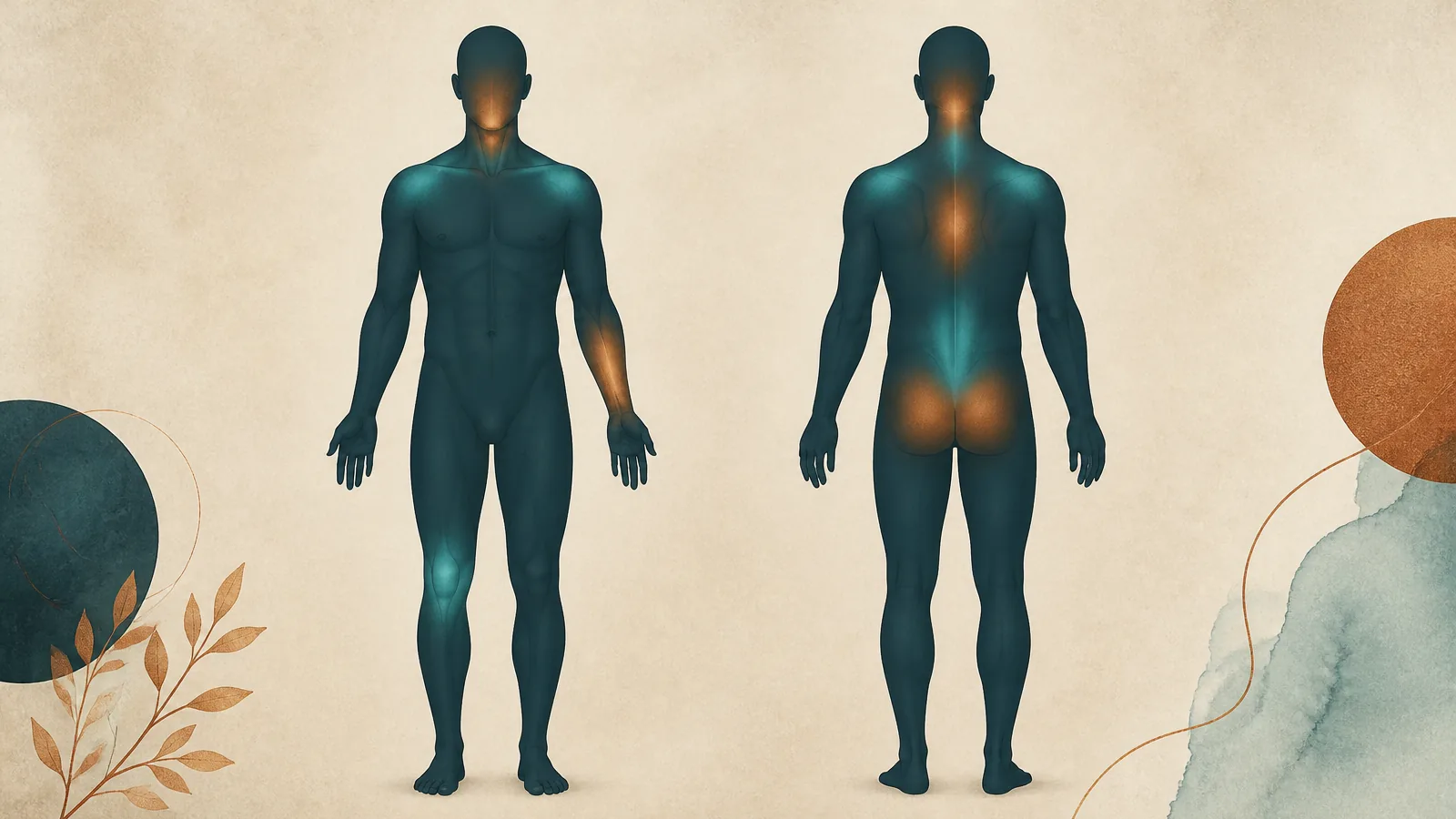
Neck, head, and nerve symptoms
- WhiplashWhat the term describes, delayed symptoms, and realistic evaluation questions.
- Neck pain after a crashStiffness, painful turning, shoulder-blade pain, and neurological warning signs.
- Headaches after a crashWhy the event history matters and when concussion screening comes first.
- Concussion warning signsA deliberately medical-first decision page.
- Disc and nerve painRadiating pain, tingling, numbness, and weakness.
- Sciatica after a car accidentLeg symptoms and what the word "sciatica" does and does not tell a doctor.
Back, shoulder, chest, and soft-tissue symptoms
- Back pain after a crashMid- and low-back patterns, function, and urgent signs.
- Shoulder and seat-belt symptomsBruising, movement limits, and why a protective belt can still leave soreness.
- Chest and rib painEmergency screening before musculoskeletal explanations.
- Soft-tissue injuries after a crashStrains, sprains, bruising, and honest limits.
Limb, spasm, and delayed symptoms
- Knee and hip pain after a car accidentWalking, stairs, getting out of a car, swelling, instability, and direct contact.
- Arm, wrist, and hand pain after a car accidentGrip, bracing, swelling, numbness, and the path from shoulder to fingertips.
- Muscle spasms after a car accidentA practical pattern log, warning signs, and why a spasm is not a diagnosis.
- Delayed pain after a car accidentA symptom timeline without the "adrenaline explains everything" shortcut.
When more than one symptom guide applies
Symptoms often overlap. A headache may arrive with neck stiffness. Back pain may travel into a leg. Seat-belt soreness may involve both the shoulder and chest. Start with the guide that matches the change bothering you most, then follow a related link only when the second symptom actually applies.
These pages are educational. They cannot prove that a symptom came from the collision. The event history and examination are what connect those pieces.
What to bring to an accident-focused visit
Bring the facts you already have: the report number if one was issued, discharge instructions or other records, a medication list, and a short timeline of what you noticed and when. Include what improved as well as what still hurts.
The car accident care page explains how those details are used during the visit. The what-to-do-after-a-crash guide starts earlier, with the scene, report, insurance calls, and first-day records.
Frequently asked questions
Not sure which guide fits? You can skip the guessing. Call Portsmouth Accident & Injury Center at (740) 876-8394 and describe what changed in your own words. We can tell you what to bring and whether a different kind of provider should see you first. The contact page also has the callback form for scheduling basics.
Related guides
Whiplash
Learn which symptoms may follow a rapid neck movement, which warning signs need medical care, and what an evaluation can clarify.
Read the guideNeck pain
See which details help describe new neck pain or stiffness after a crash and which symptoms require urgent medical attention.
Read the guideBack pain
See how the location, timing, and movement changes help describe back pain after a crash, along with symptoms that require urgent medical attention.
Read the guideKnee and hip pain
See how walking, stairs, getting in and out of a car, swelling, and weakness help describe knee or hip changes after a crash.
Read the guide
Sources and further reading
- CDC concussion signs and symptoms(opens in a new tab) — The CDC explains common concussion symptoms and danger signs that require emergency attention.
- MedlinePlus: chest pain(opens in a new tab) — MedlinePlus explains that chest pain has many possible causes and identifies symptoms that require emergency care.
- Southern Ohio Medical Center(opens in a new tab) — SOMC publishes current information about hospital, emergency, urgent-care, and other local medical services.
This page provides general information. It cannot diagnose an injury or replace emergency or medical care.