Whiplash after a car accident
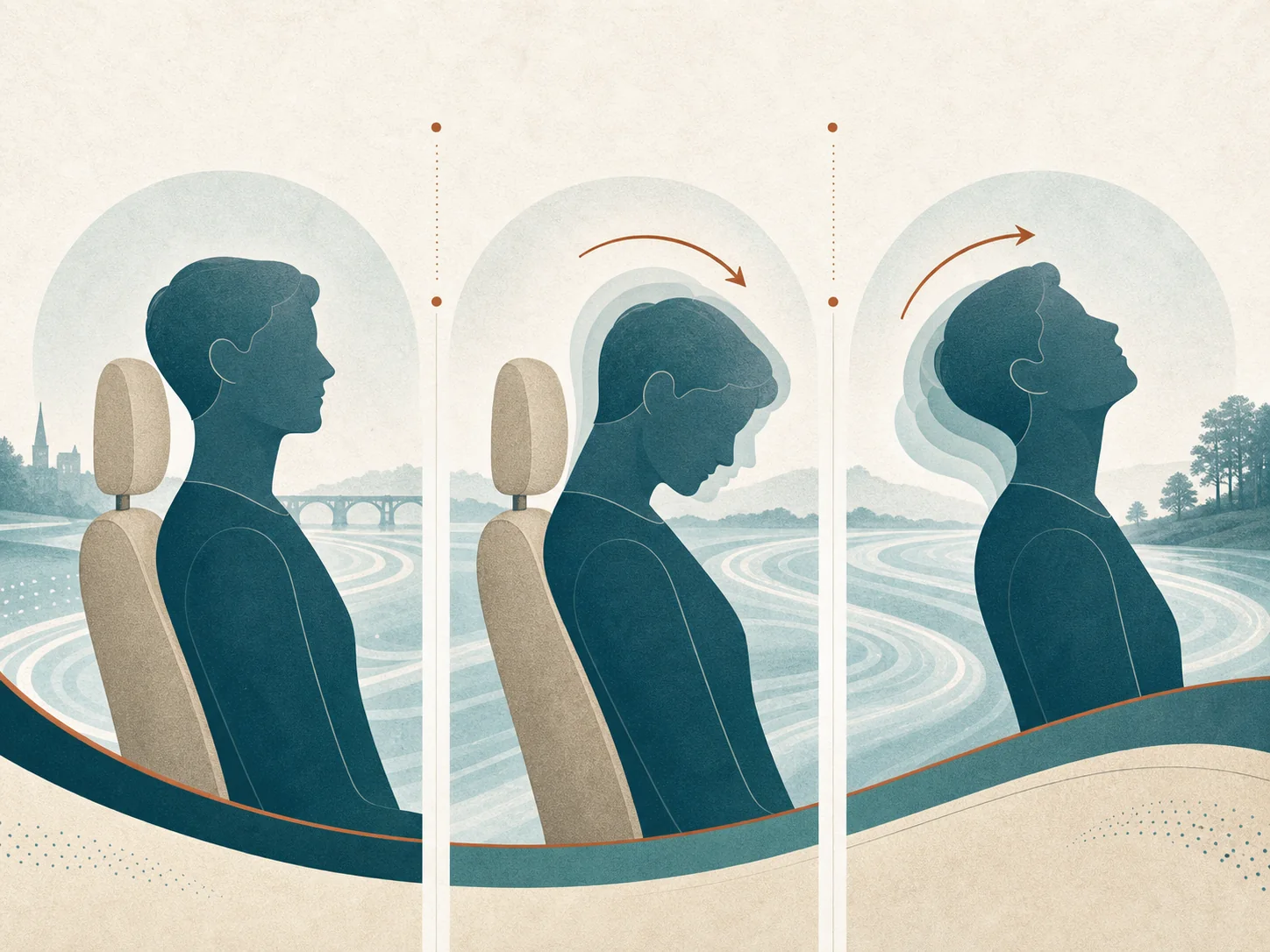
Symptoms you may notice after a crash
People use "whiplash" to mean almost any neck pain after a crash — which is why the history, symptom timing, nerve signs, and exam matter more than the word itself.
The MedlinePlus whiplash overview(opens in a new tab) describes common symptoms. It explains that pain may start after a delay. More serious harm can involve broken bones, discs, ligaments, muscles, or nerves.
Three things the word “whiplash” does not tell you
The label is useful shorthand for a rapid neck-motion event, but it leaves three important questions unanswered:
- Severity: the word does not grade how serious the problem is.
- Structure: the word does not identify which tissue or structure is involved.
- Next step: the word does not decide whether you need emergency care, medical evaluation, conservative care, imaging, or referral.
Timing, function, warning signs, and examination findings matter more than the label alone.
When the symptoms began
Many people feel little at the scene and much stiffer later. Tell the doctor when each symptom first became noticeable and what you were doing when you noticed it. Timing by itself does not prove a cause, and a symptom that shows up late still counts.
A useful timeline might say:
- At the scene: shaken, no obvious neck pain.
- By evening, looking right brought on tightness.
- Next morning: stiffness and a headache near the base of the skull.
- During the next drive: difficulty checking the blind spot.
Keep the description factual. Severe, worsening, or neurological symptoms require prompt medical attention regardless of timing.
Whiplash warning signs that require medical care
Call 911 or seek urgent medical care for any of the following:
- Loss of consciousness or worsening confusion.
- Seizure or repeated vomiting.
- A severe or sudden headache.
- New weakness or numbness.
- Difficulty walking.
- Trouble breathing or swallowing.
- Severe chest pain.
- Loss of bladder or bowel control.
- Other emergency symptoms.
If a head injury is possible, read the CDC concussion signs and symptoms(opens in a new tab). Chiropractic care is not emergency or concussion management.
What will the exam actually tell you?
The visit walks through the collision, the symptoms in the order they appeared, and how far your neck moves before it complains. From there we look at related pain, nerve findings, anything you were already dealing with, and the daily tasks that changed. What gets examined depends on what you describe — there is no fixed sequence everyone goes through.
The visit can help decide whether:
- The complaint appears appropriate for conservative musculoskeletal care.
- A medical opinion or imaging referral should come first.
- Symptoms should be monitored differently.
- The plan needs to change.
The visit can clarify the current findings and appropriate next steps, but it cannot predict an exact recovery date.
If care is recommended, ask these questions first
If chiropractic care is considered, ask what the plan is meant to help. Ask about other options, short-term effects, risks, and how progress will be checked.
The NCCIH spinal manipulation overview(opens in a new tab) reports that spinal manipulation may help some neck-pain patterns. Parts of the evidence are limited or mixed. The source also lists possible risks. These include rare but serious reports about neck arteries. Use the source to prepare questions, not to choose a technique without an examination.
Changes in driving, work, and sleep
After a collision, a change in function can be easier to describe than pain alone:
- Turning to merge or back out.
- Looking down to read.
- Sleeping through the night.
- Carrying a light bag.
- Sitting through a shift.
- Concentrating without a building headache.
Pick a few tasks that matter to you and notice whether they are getting easier, harder, or staying the same. A plan should respond to that pattern instead of continuing on autopilot.
Keep crash documents and health records organized separately
The police crash report documents the collision from the responding agency's perspective. The health-care record documents the history you reported, findings, decisions, and care. One does not replace the other.
For the nonclinical side of the crash, the Ohio crash report guide covers the report and the what-to-do-after-a-crash guide covers the first-day checklist.
Frequently asked questions
What to explain when you call
You already have a timeline — that is more than most first calls start with. Call (740) 876-8394 and walk through it: what you felt at the scene, what changed by evening, what your neck did the next morning. We'll tell you what to bring, and if the picture points toward a medical evaluation first, we'll say so on the phone rather than after you drive in. Prefer to be called back? Request a callback for scheduling basics.
More reading — injury index, accident care, neck pain, headaches, and delayed pain.
Related guides
Neck pain
See which details help describe new neck pain or stiffness after a crash and which symptoms require urgent medical attention.
Read the guideCar accident care
See how the office evaluates non-emergency symptoms after a crash, documents findings, and decides when a medical referral is needed.
Read the guideConcussion warning signs
Review CDC concussion danger signs and learn why suspected concussion belongs with medical care, not chiropractic treatment.
Read the guideNeck pain (everyday)
Be ready to discuss neck stiffness, painful turning, shoulder-area pain, and changes during work, sleep, or driving.
Read the guide
Sources and further reading
- MedlinePlus: whiplash(opens in a new tab) — MedlinePlus describes common whiplash symptoms, including symptoms that may become noticeable after a delay.
- CDC concussion signs and symptoms(opens in a new tab) — The CDC explains common concussion symptoms and danger signs that require emergency attention.
- NCCIH: spinal manipulation, what you need to know(opens in a new tab) — NCCIH summarizes spinal manipulation, current evidence, possible risks, and questions patients should discuss with a clinician.
- Ohio Crash Report Search(opens in a new tab) — The Ohio Department of Public Safety provides the statewide search for crash reports filed by Ohio law enforcement agencies.
This page provides general information. It cannot diagnose an injury or replace emergency or medical care.