Shoulder and seat-belt symptoms after a crash
A seat belt can protect you and still leave soreness
NHTSA explains that lap and shoulder belts secure the body across the pelvis and rib cage. Seat belts greatly cut the risk of fatal and serious injury. Read the NHTSA seat-belt safety guide(opens in a new tab).
Do not turn belt soreness into an argument against wearing a belt. Always buckle correctly.
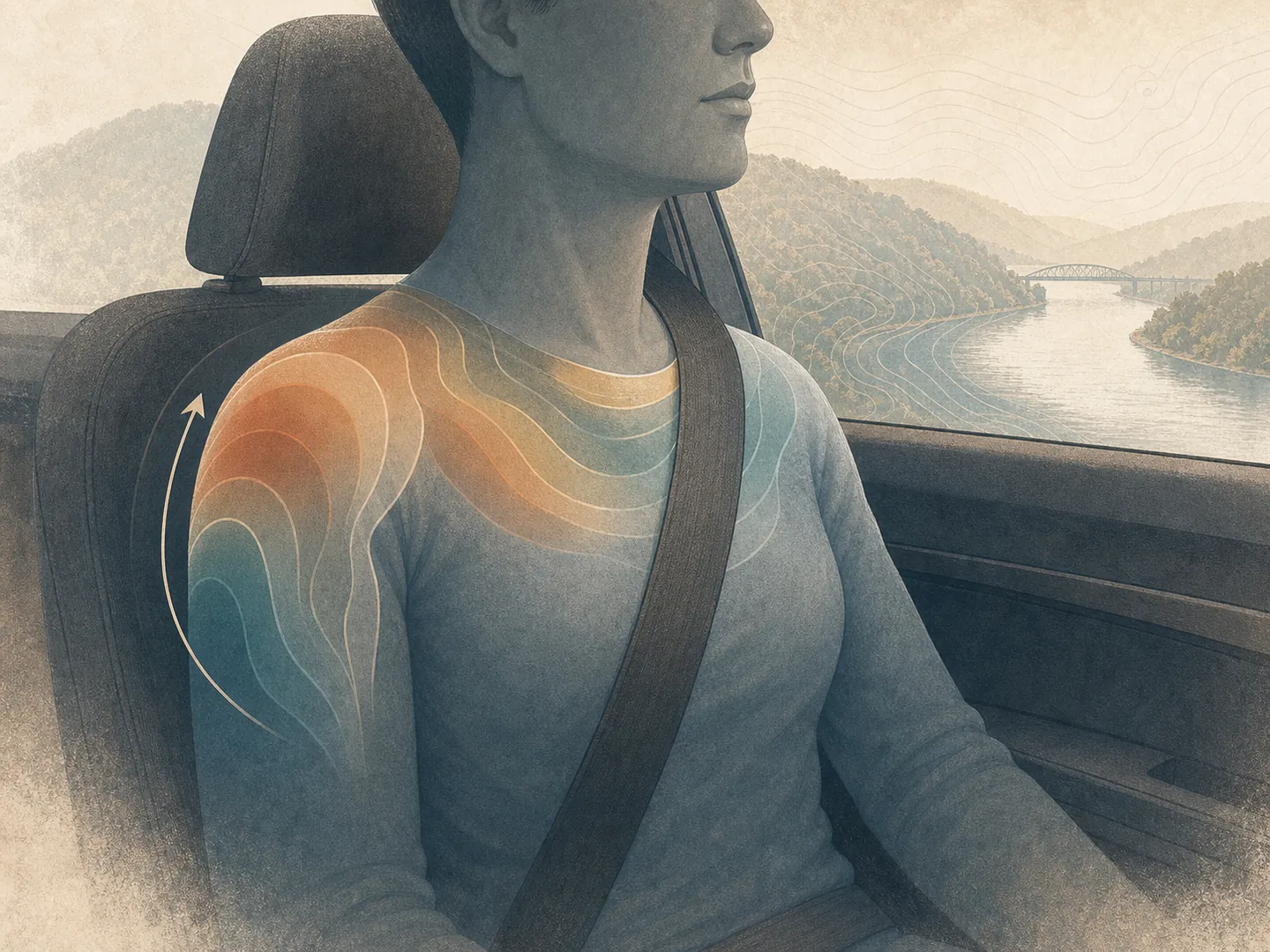
Bruising, movement, and daily-function changes
- Bruising or abrasion along the belt path.
- Pain lifting the arm.
- Pain reaching across the body.
- Shoulder weakness or a sense of instability.
- Collarbone tenderness or deformity.
- Neck pain traveling toward the shoulder.
- Chest pain or breathing difficulty.
Photos can record visible bruising for your own file. They do not diagnose the injury underneath.
Shoulder, chest, and breathing symptoms that need medical care
Seek urgent medical care for any of these signs:
- Severe chest pain or trouble breathing.
- A significant deformity.
- An arm that turns pale or cold.
- Major weakness.
- Uncontrolled bleeding.
- Any other emergency symptom.
Follow discharge instructions after a collision.
What a musculoskeletal evaluation may include
After urgent injury is ruled out, an exam may look at symptom location, shoulder movement, neck overlap, function, and whether a referral or imaging fits. The exact examination and care are individualized.
Read chest and rib pain and neck pain after a crash. What happens at a first visit explains how the appointment is organized. Arm and hand symptoms and soft-tissue injuries often sit alongside belt-line soreness. The symptom index and accident care page cover the wider picture.
Frequently asked questions
One movement you can't do yet is enough to start with.
Reaching a seat belt across, lifting an arm to wash your hair, getting a jacket on — pick the one that stopped working and call (740) 876-8394. You don't need to know whether it's the shoulder, the collarbone, or the neck; sorting that out is what the exam is for. If chest or breathing symptoms are part of it, those go to medical care first and we'll tell you so. Prefer to be called back? Request a callback for scheduling basics.
Related guides
Chest and rib pain
Chest pain after a crash can be urgent. Learn the emergency signs, what to report, and when a later musculoskeletal question may be appropriate.
Read the guideArm, wrist, and hand pain
Arm, elbow, wrist, or hand symptoms after a Portsmouth crash? Track grip, motion, numbness, swelling, warning signs, and next-step questions.
Read the guideSoft-tissue injuries
Learn what strains, sprains, bruising, soreness, and muscle guarding may describe—and what those terms cannot diagnose.
Read the guideInjuries index
Browse symptom guides for post-crash neck, back, head, nerve, shoulder, chest, hip, knee, arm, hand, and soft-tissue concerns.
Read the guide
This page provides general information. It cannot diagnose an injury or replace emergency or medical care.