Chest and rib pain after a car accident
Chest pain after a crash requires medical screening first
There is a lot packed behind the breastbone — heart, lungs, ribs, muscles, blood vessels — and chest pain can start in any of them(opens in a new tab). Some of those causes are serious, and none of them can be sorted out by pressing on the sore spot at home.
A crash adds injury on top of that. Chiropractic care does not come first for chest pain after a crash.
What to tell the medical provider
- Pressure, tightness, sharp pain, or tenderness.
- Trouble taking a breath.
- Pain with breathing or coughing.
- Dizziness, sweating, nausea, or fainting.
- Visible bruising or swelling.
- Abdominal pain.
- Seat-belt and airbag involvement.
- Whether symptoms are worsening.
Do not press again and again on a sore spot. Do not use that as a home diagnosis.
Musculoskeletal questions after urgent causes are addressed
A medical provider should check the chest first. If a separate muscle or joint problem remains, bring your discharge papers and reports. The office can then decide if a visit fits its scope.
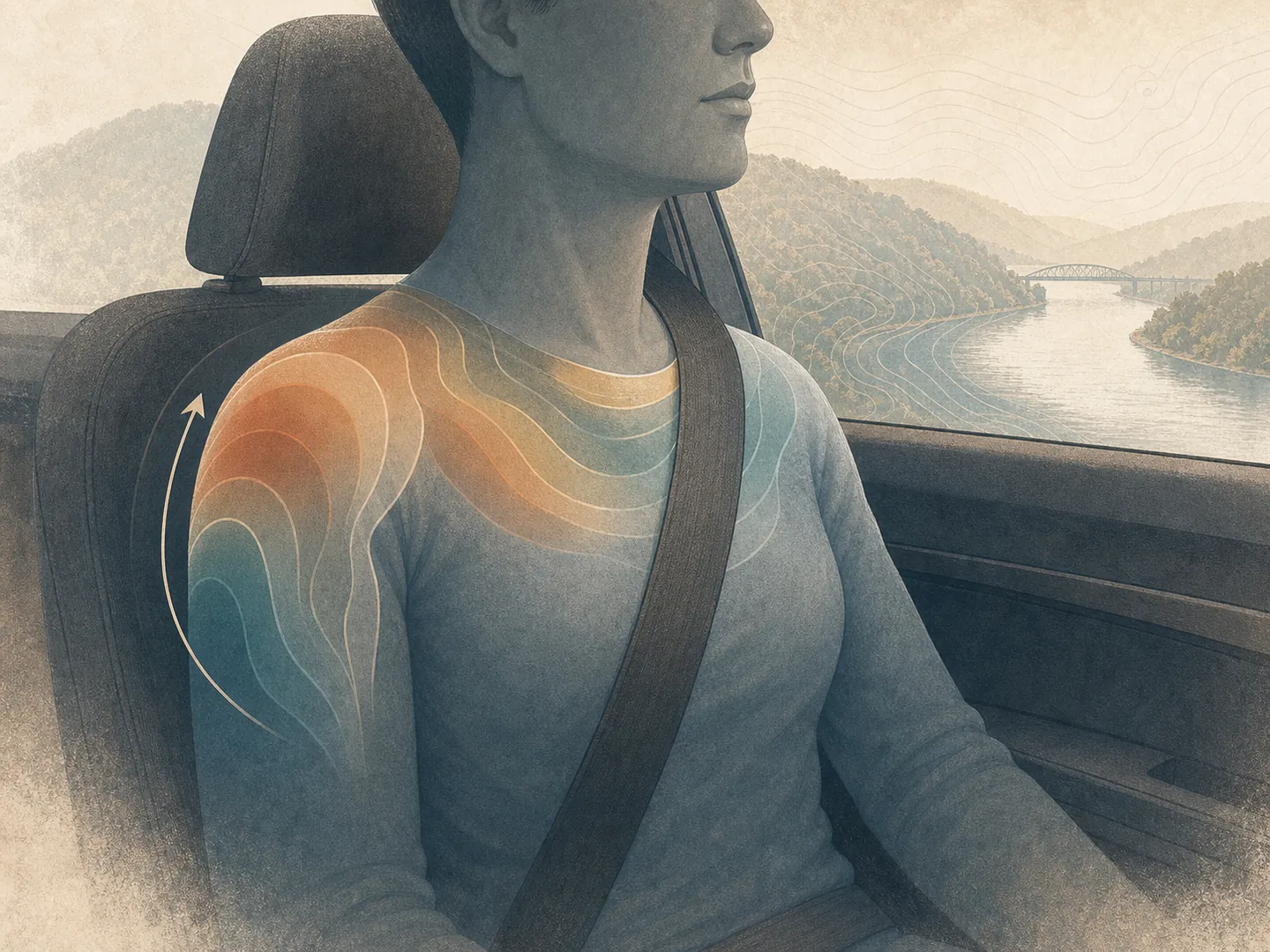
If the concern is mainly along the belt or shoulder, the shoulder and seat-belt guide is more specific; the car accident care page explains the visit itself.
Frequently asked questions
Once the urgent causes have been ruled out, the symptom index covers what may be left — most often shoulder and seat-belt soreness or a soft-tissue complaint. If your head took a hit too, read concussion warning signs first.
Chest symptoms go to medical care. Everything else can wait for a phone call.
If a medical provider has looked at the chest question and you are still stiff, sore, or unable to reach the way you could before, call (740) 876-8394 and describe it. Bring the discharge papers if you have them. Prefer to be called back? Request a callback for scheduling basics.
Related guides
Shoulder and seat belt injuries
Notice changes in shoulder movement, belt-area soreness, bruising, chest symptoms, and breathing after a crash.
Read the guideCar accident care
See how the office evaluates non-emergency symptoms after a crash, documents findings, and decides when a medical referral is needed.
Read the guideYour first visit
See what to bring, how the examination is organized, what questions to ask, and when another provider may be more appropriate.
Read the guideConcussion warning signs
Review CDC concussion danger signs and learn why suspected concussion belongs with medical care, not chiropractic treatment.
Read the guide
This page provides general information. It cannot diagnose an injury or replace emergency or medical care.