Radiating pain and numbness after a crash
Where do you feel it?
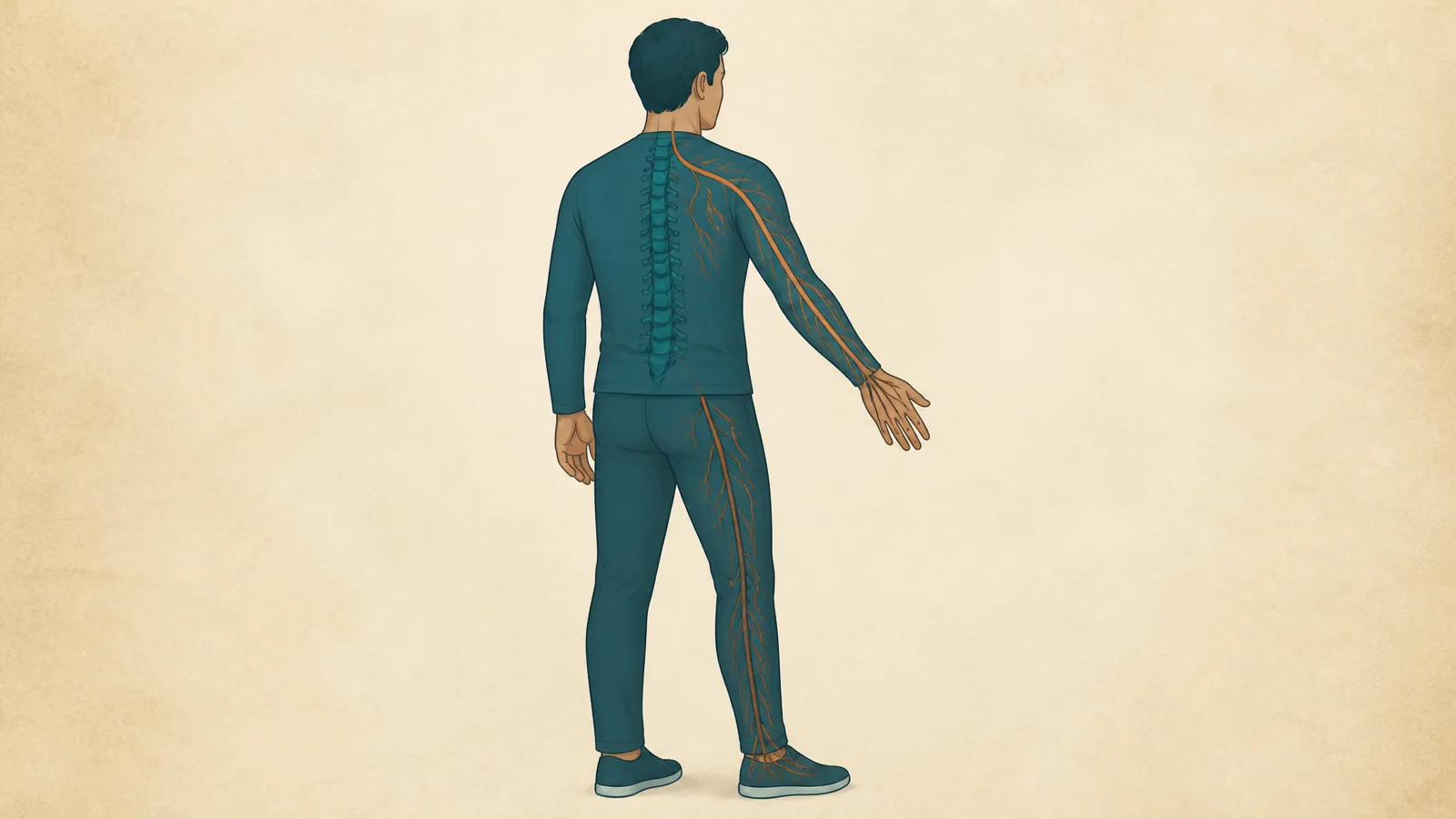
Point to the spot where the feeling starts and trace how far it goes. Say what it feels like, when it began after the crash, and whether one side or both sides are involved. A few details are worth writing down before the visit.
- Where the feeling starts and how far it travels.
- Whether it is pain, tingling, numbness, burning, or weakness.
- Whether coughing, sitting, walking, or turning your neck changes it.
- Whether grip, balance, foot control, or coordination has changed.
"Tingling from the outer forearm into two fingers" is more useful than "pinched nerve."
When to seek urgent medical care
Seek urgent medical care for new significant weakness, inability to walk normally, loss of bladder or bowel control, numbness around the groin, rapidly spreading numbness, or another neurological emergency. Call 911 when appropriate.
What could be causing these symptoms?
Radiating pain, numbness, tingling, or weakness can come from more than one source. A disc is one possibility. Irritated nerves, joints, and muscles are others. Scan findings still need to be read alongside your symptoms, so a picture alone does not settle the question.
Your history and the examination help sort this out. They also help show whether the complaint fits conservative musculoskeletal care, or whether a medical, neurological, orthopedic, or imaging referral should come first.
If the pain runs down one leg, the MedlinePlus sciatica article(opens in a new tab) describes what that pattern usually feels like.
What has become harder to do?
Everyday tasks often show the change first. Tell the doctor if you drop objects, fumble buttons, stumble on a curb, or run out of strength in an arm or leg sooner than you used to.
Read neck pain after a crash, back pain after a crash, and sciatica after a car accident. What happens at a first visit covers the appointment itself. If the symptoms sit in an arm or hand, that guide goes further. The symptom index and accident care page cover the wider picture.
Frequently asked questions
If you can trace the route, you have the useful part.
Call (740) 876-8394 and describe where the feeling starts, how far it travels, and what makes it change. That is the whole first call — no diagnosis needed, no name for it required. We'll tell you what to bring, and if the pattern belongs with a medical or neurological evaluation first, we'll say so on the phone. Prefer to be called back? Request a callback for scheduling basics.
Related guides
Sciatica after a crash
Learn how to describe leg pain, numbness, tingling, or weakness and which neurological symptoms need urgent medical care.
Read the guideArm, wrist, and hand pain
Arm, elbow, wrist, or hand symptoms after a Portsmouth crash? Track grip, motion, numbness, swelling, warning signs, and next-step questions.
Read the guideNeck pain
See which details help describe new neck pain or stiffness after a crash and which symptoms require urgent medical attention.
Read the guideInjuries index
Browse symptom guides for post-crash neck, back, head, nerve, shoulder, chest, hip, knee, arm, hand, and soft-tissue concerns.
Read the guide
This page provides general information. It cannot diagnose an injury or replace emergency or medical care.