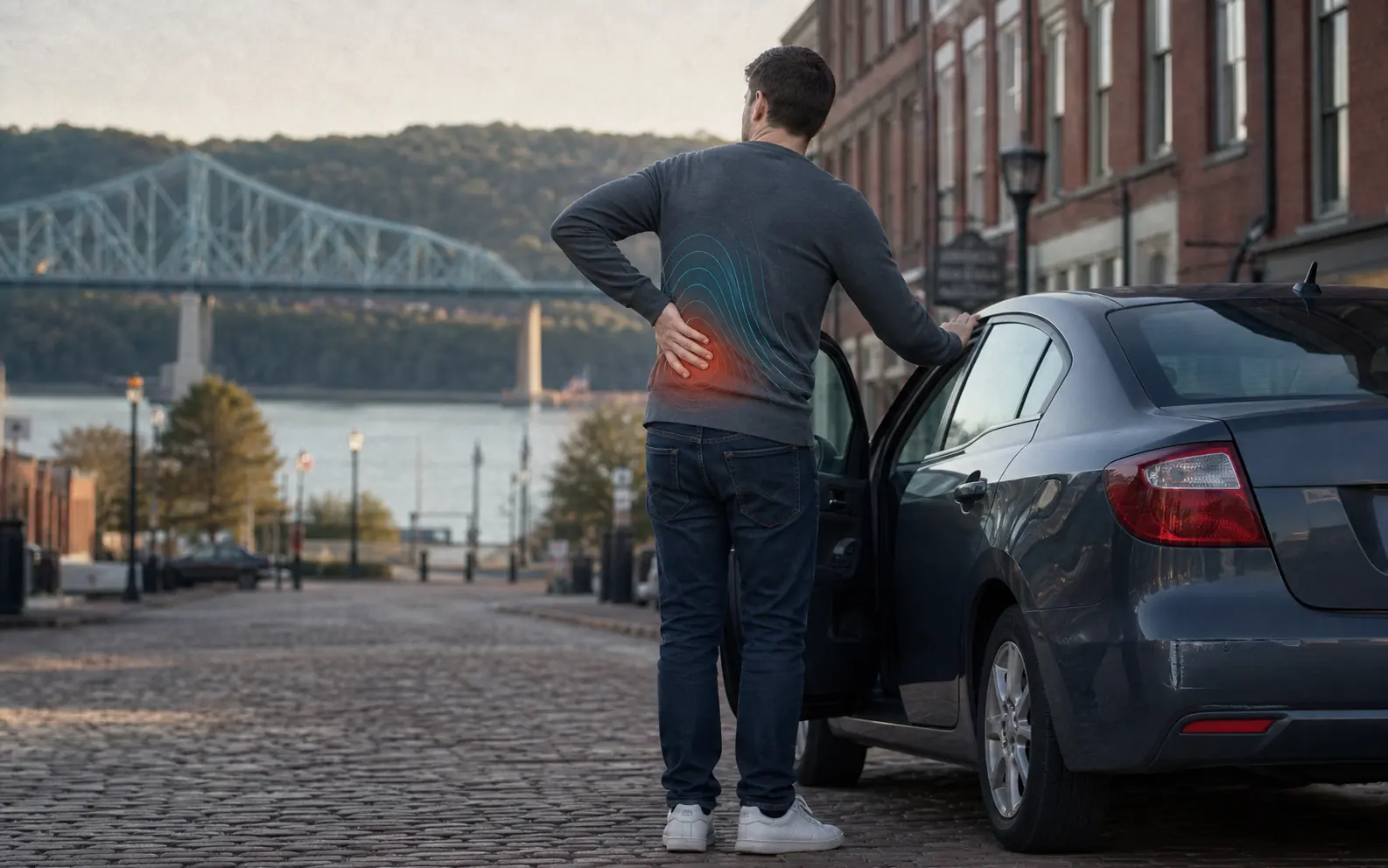
Back pain after a car accident
Describe the location, timing, and movement changes
Details like these help the doctor understand the pattern:
- Mid-back, low back, or both.
- Local pain or pain traveling into a hip or leg.
- Stiffness after sitting or sleeping.
- Pain with lifting, coughing, walking, or getting out of a seat.
- Numbness, tingling, weakness, or balance trouble.
- Change in bladder or bowel control.
The MedlinePlus back-injury overview(opens in a new tab) says a sudden jolt can harm muscles, discs, or bones in the spine. A car crash can cause such a jolt. This list does not diagnose your pain.
Back-pain warning signs require medical care
Seek urgent medical care after major trauma. Get help for new loss of bladder or bowel control, groin numbness, marked leg weakness, or trouble walking. Severe belly or chest symptoms also need medical care. Call 911 for an emergency.
Explain what happened during the collision
Note the direction of impact, your body position, seat belt and airbag, what you noticed at the scene, and what changed later. Do not estimate crash force or invent technical conclusions. The visit uses those details as health history, not as accident reconstruction.
The Portsmouth car accident care page explains the full process, and what to expect at a first visit covers the appointment itself. If tightening or spasm is the main event, see muscle spasms after a crash; the full symptom index covers the rest. The Ohio crash report guide explains how to obtain the agency record separately. If the pain runs into a leg, read sciatica after a crash and disc and nerve pain.
Track changes in daily activities
Choose ordinary tasks that changed:
- Sitting through a drive.
- Standing during a shift.
- Walking a familiar distance.
- Lifting groceries or a laundry basket.
- Sleeping and turning in bed.
- Getting into or out of the vehicle.
Describe what happens rather than what you think it proves.
What can the exam sort out?
Between what you describe and what the exam finds, one question gets answered: does this look like a muscle-and-joint problem, or should a medical review or imaging come first? From there we look at what you can and can't do comfortably and which care options actually fit. What we write down is what was found and what was recommended — not a prediction of how fast your back will settle, because nobody can honestly make that one.
Frequently asked questions
What to explain when you call
One sentence is enough to start.
"It hurts when I stand up from the couch" is a complete first call. Ring (740) 876-8394 and describe what your back does now that it didn't do before the crash. We'll tell you what to bring, or say plainly if a medical provider should see you first. Prefer to be called back? Request a callback for scheduling basics.
Related guides
Sciatica after a crash
Learn how to describe leg pain, numbness, tingling, or weakness and which neurological symptoms need urgent medical care.
Read the guideDisc and nerve pain
Learn how to describe radiating pain, numbness, tingling, or weakness and when those symptoms change the urgency of care.
Read the guideBack pain (everyday)
Learn how to describe mid- or low-back pain, identify warning signs, and prepare useful questions for an evaluation.
Read the guideCar accident care
See how the office evaluates non-emergency symptoms after a crash, documents findings, and decides when a medical referral is needed.
Read the guide
Sources and further reading
- MedlinePlus: back injuries(opens in a new tab) — How sudden jolts such as car accidents can injure back muscles, discs, and vertebrae.
- Ohio Crash Report Search(opens in a new tab) — The Ohio Department of Public Safety provides the statewide search for crash reports filed by Ohio law enforcement agencies.
This page provides general information. It cannot diagnose an injury or replace emergency or medical care.