How to track progress without grading every day by pain alone
Published by Portsmouth Accident & Injury Center.
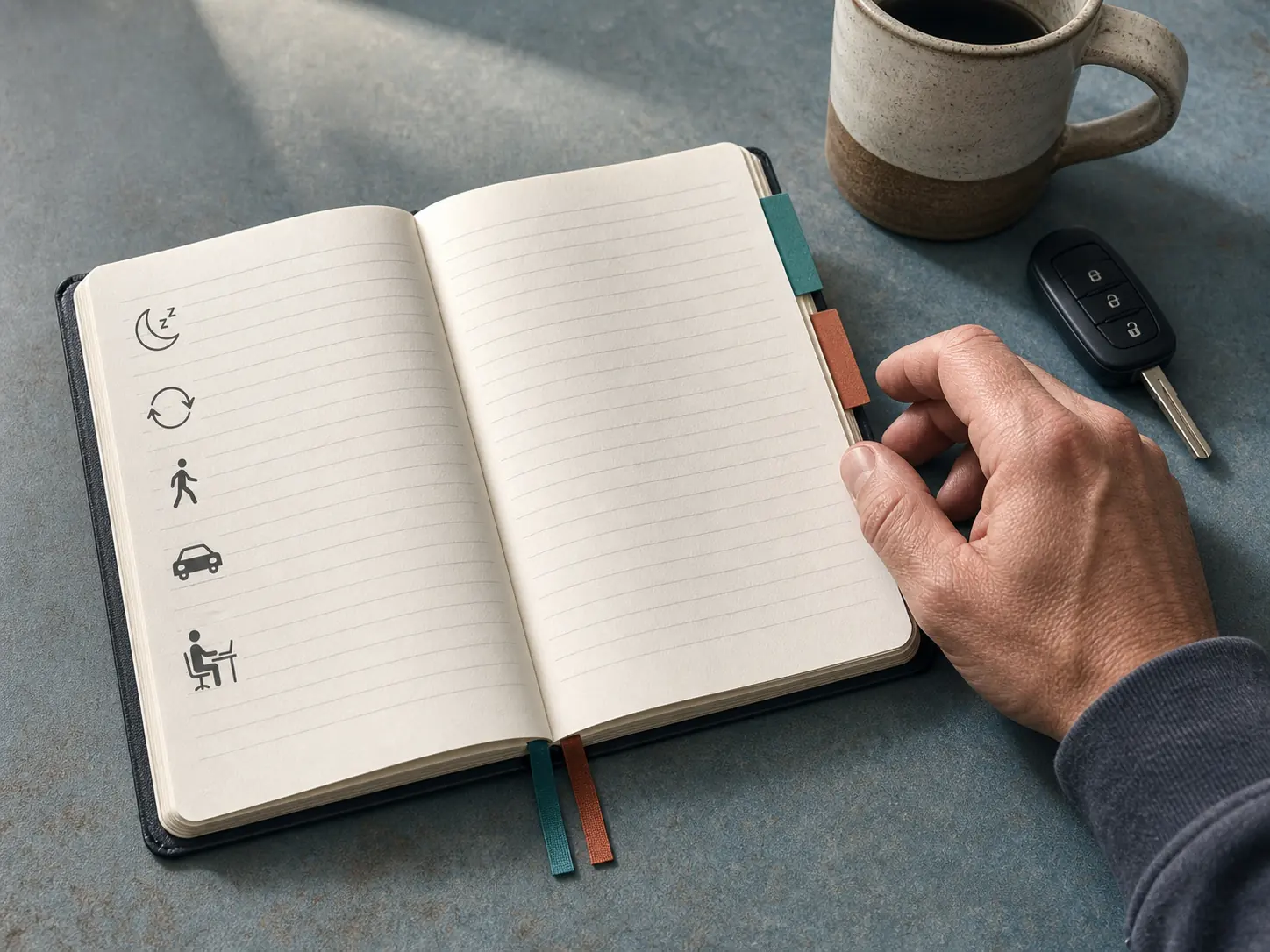
A pain score is one data point. Add repeatable measures for sleep, turning, sitting, walking, driving, work, and ordinary home tasks, then compare the same actions under similar conditions once or twice a week. A record like that shows a trend, a setback, a medication change, and what your body can actually do — without forcing every day into "better" or "worse."
The zero-to-ten scale(opens in a new tab) is quick. It is also asked to carry more information than it can hold.
A six on Monday after a full workday is not the same as a six on Sunday after rest. A four with new hand weakness may matter more than a seven with better movement. A pain number can open the conversation. It should not be the whole conversation.
Which five functions should you choose?
Pick five from your actual week:
- Sleep: how many times the complaint wakes you
- Driving: comfortable time behind the wheel, and whether you can check mirrors safely
- Work: tolerance for the task that matters most
- Movement: one repeatable action such as stairs or putting on shoes
- Activity: walking time, a light household task, or another normal demand
Keep the definitions stable. If "walking" means a flat ten-minute route this week, do not compare it with two hours of shopping next week.
Build a two-minute scorecard
One line per entry, in ordinary sentences: the date, what you did, how much, what the symptom did during it, how long it took to settle, and anything else worth knowing.
For example:
> Sept. 2, passenger-seat ride, 28 minutes. Neck tightness started at 20 minutes and eased about 12 minutes after getting out. No headache.
You are not trying to earn a good grade or prove a bad day. You are building information that can change a plan.
Daily notes help early on, but repeated testing becomes its own burden. For most functions, once or twice a week is enough to see a trend — plus a note whenever something changes sharply. Compare the same chair, route, or task when you can, and say so when the conditions were very different.
What counts as progress?
Progress can look like these changes, which match how chronic pain is described(opens in a new tab):
- Longer tolerance before symptoms begin
- Faster settling after an activity
- Better range during a task you actually need
- Fewer sleep interruptions
- Less need to modify a movement
- Symptoms covering a smaller area
- More confidence, without unsafe pushing
Pain intensity may improve alongside these. Sometimes function changes first. Sometimes neither changes and the plan needs review.
How should setbacks be recorded?
Use neutral language. Instead of "I ruined all my progress," write:
> Carried two grocery bags up one flight. Low-back tightness increased for about three hours. Back to the usual baseline by morning.
Then ask whether the activity exceeded current guidance, whether a new symptom appeared, and whether the provider needs to know before the next visit.
A setback can be information without becoming a verdict.
Why do reassessments matter?
A treatment plan should not run on autopilot. At a chiropractic reassessment, the provider should compare the baseline with current findings, ask about function, review what got in the way, and decide whether to continue, change, refer, or end care.
Bring the scorecard. Do not assume the clinic remembers every detail from a conversation three weeks earlier.
What can distort the trend?
Several things can make one day hard to compare with another: a medication change, a longer shift, poor sleep, a new illness, different activity, another incident, stress, or simply taking the measurement at a different time of day. Note those without using them to explain away everything — the point is context.
You also do not need to track every symptom. Follow the ones that affect decisions and function; a long list of momentary sensations hides the main pattern. But report new warning signs promptly rather than waiting for the next scheduled entry. Major weakness, neurological changes, breathing difficulty, increasing confusion, bladder or bowel loss, or another serious change needs the appropriate level of care straight away.
How can the record improve the care conversation?
It turns vague questions into answerable ones.
Instead of "Am I healing?" ask:
- Why is sitting improving while the leg symptom is not?
- Is the recovery time after work acceptable for this stage?
- Should the plan change because grip is weaker?
- Which function should we recheck next?
- What would trigger a referral?
Use the questions to ask before a care plan and the site resource hub to keep the conversation organised. City of Portsmouth resources(opens in a new tab) cover local logistics around appointments.
Questions about progress tracking
Related guides
- What a reassessment should actually reassessA reassessment should compare symptoms, function, findings, goals, safety, and plan—not simply reset a visit counter.
- Nine questions to ask before a care plan beginsAsk about findings, goals, options, risks, reassessment, referrals, visit frequency, cost, and privacy before agreeing to care.
- Helpful Portsmouth and Ohio resourcesUse official agencies, hospital information, practical checklists, and visit guides selected for Portsmouth-area readers.
For care questions, start with car accident care after a collision or chiropractic care in Portsmouth for an everyday concern.
This page provides general information. It cannot diagnose an injury or replace emergency or medical care.