Headache after a car accident without hitting your head
Published by Portsmouth Accident & Injury Center.
“But I never hit my head” feels like it should end the conversation. It does not.
The more useful questions are: When did the headache begin? Where is it? What else changed? Is it getting worse? Did you lose consciousness or feel dazed? Are there new problems with balance, vision, speech, memory, strength, or vomiting?
Those answers help determine urgency. The absence of a remembered head strike is one detail, not a home clearance test.
Can a collision cause a headache without a direct head strike?
Yes, a headache can appear after a collision without a remembered impact to the skull. A clinician may consider several possible headache causes(opens in a new tab), including a concussion mechanism involving rapid movement, a neck-related headache, muscle tension, medication effects, disrupted sleep, dehydration, or an unrelated medical problem.
The list cannot identify the cause of an individual headache. A clinician needs the history, symptom pattern, and examination findings. Emergency warning signs still require emergency care.
If the headache appears with neck stiffness, note both. If it began after a poor night of sleep, note that too. Accurate details give an evaluator something real to work with.
Which headache signs after a crash are emergencies?
This is not the full universe of emergencies. Severe neck pain, chest symptoms, breathing difficulty, or any rapidly worsening condition may also require urgent care.
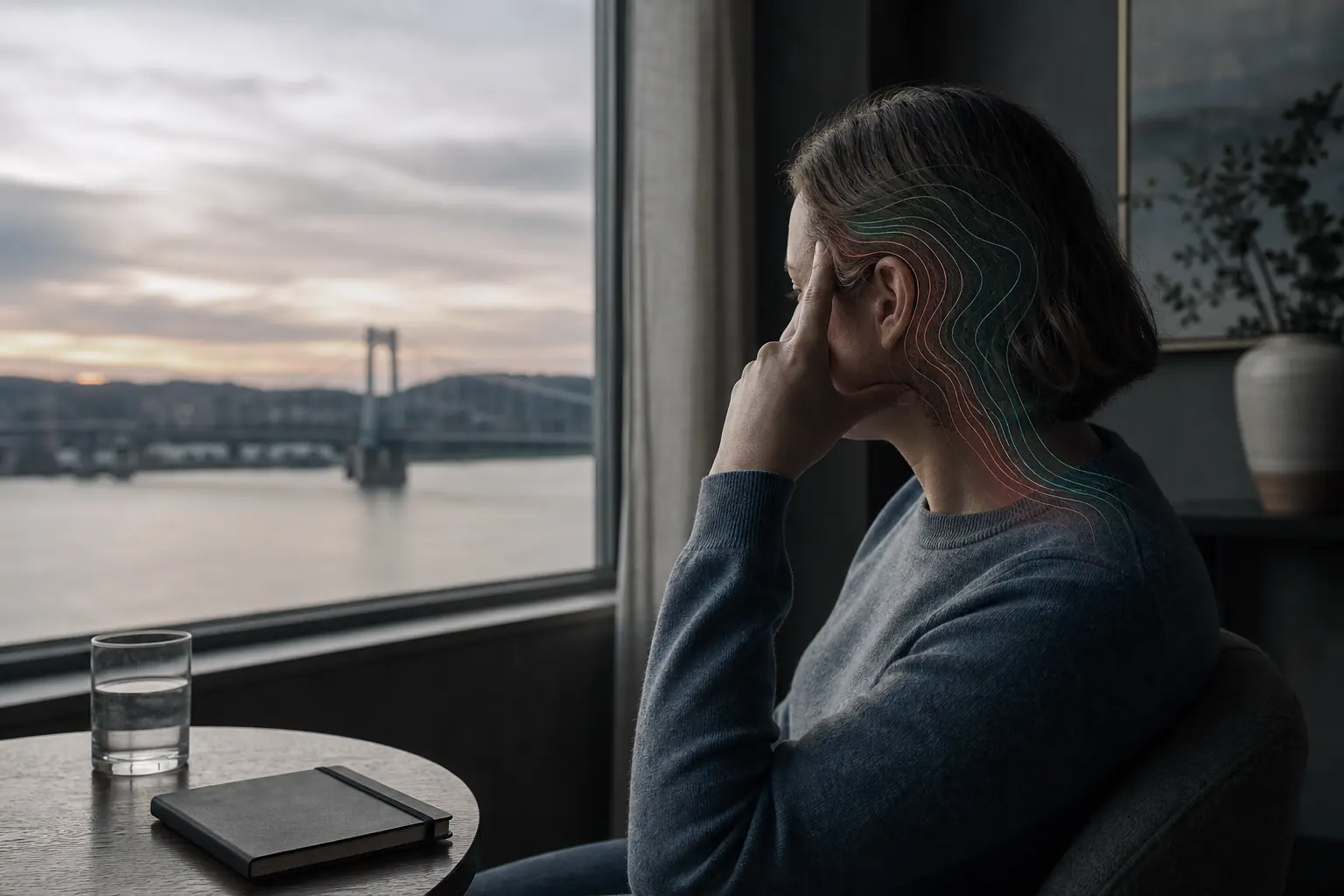
What headache details will a clinician want to know?
Picture the last six hours as a timeline rather than a single pain number. Write down:
- Onset: at the scene, on the drive home, after a nap, the next morning, or another time.
- Location: forehead, one side, behind the eyes, base of the skull, all over, or somewhere else.
- Pattern: steady, pulsing, pressure, brief episodes, or changing.
- Change: improving, stable, returning, or worsening.
- Other symptoms: nausea, dizziness, light sensitivity, vision change, confusion, neck pain, numbness, or weakness.
- Relevant context: medications, prior migraines or headaches, sleep, food and fluid intake, and any later event.
If you were evaluated at an emergency department — locally, Southern Ohio Medical Center(opens in a new tab) — or another medical office, bring the discharge instructions or know where they are. Follow those instructions over anything you read here.
Is a post-crash headache automatically a concussion?
No. A headache is one possible concussion symptom, but it is not enough to diagnose or rule out concussion. A medical professional considers the mechanism, symptoms, neurological findings, history, and course.
Do not use the ability to work, text, or hold a conversation as proof that everything is fine. Also do not assume that every headache means brain injury. Both shortcuts can send you in the wrong direction.
Our page about headaches after a car accident explains the clinic’s scope and the referral-first boundary. Suspected concussion and neurological danger signs need appropriate medical assessment. The concussion warning-sign list shows which changes need care right away.
Could the headache be related to the neck?
Sometimes head pain and neck symptoms appear together. The upper neck, muscles, movement, and posture may be relevant, but the overlap is exactly why a safety screen comes first. “It starts at the base of my skull when I turn left” is a useful observation. “It is definitely a pinched nerve” is a conclusion the observation cannot support by itself.
A musculoskeletal evaluation may be reasonable after urgent medical concerns have been addressed. It should include range of motion, relevant neurological checks, history, and referral decisions. It should not promise to “fix” every post-crash headache with the same procedure. Our neck pain after a crash guide covers what to watch for when the neck is involved.
What should you do during the first day?
Follow the instructions from any clinician who has already examined you. Avoid alcohol or unapproved activity if your medical instructions tell you to. Arrange help with driving or monitoring if advised. Keep your phone available, but do not turn symptom checking into an hour of bright-screen searching.
If no one has evaluated you and the headache is new after the crash, contact an appropriate medical provider and describe the timing and accompanying symptoms. Emergency signs belong with 911 or an emergency department.
For the rest of the practical sequence, use our first 72 hours after a Portsmouth crash guide and the car accident evaluation page.
Questions Portsmouth patients ask
Related guides
- HeadachesLearn which post-crash headache signs require medical care and when neck-related evaluation may be considered after urgent concerns are addressed.
- Chiropractor in PortsmouthLearn how the office approaches accident-related concerns, everyday neck or back pain, joint stiffness, and first-visit decisions.
- Emergency department, medical visit, or chiropractor?Choose the right setting after a crash by urgency, symptoms, scope, and what each kind of visit is meant to answer.
For care questions, start with car accident care after a collision or chiropractic care in Portsmouth for an everyday concern.
This page provides general information. It cannot diagnose an injury or replace emergency or medical care.