Emergency department, medical visit, or chiropractor?
Published by Portsmouth Accident & Injury Center.
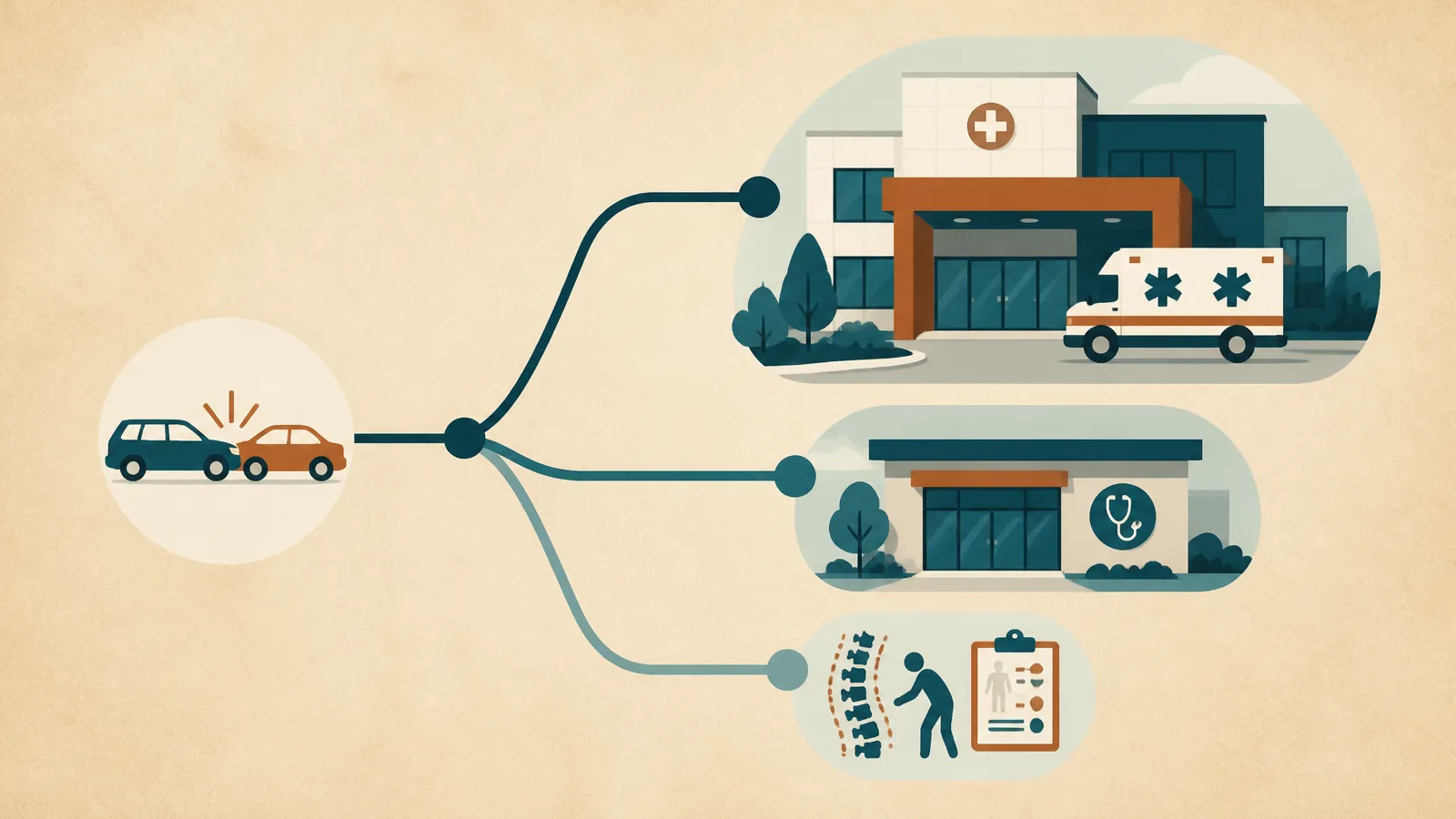
Choose the care setting by the question, not by the sign on the building
A car accident can create several health questions at once. One person may have chest pain that needs emergency evaluation and neck stiffness that can be discussed later. Another person may have no emergency signs but develop a headache that raises a concussion question. Someone else may have a sore back and no head, chest, or neurological symptoms.
A single crash can raise all three at once. The point is not a contest between providers. The point is which question needs an answer first.
Emergency care answers the safety question
Call 911 or seek emergency care for serious warning signs. Those include worsening confusion, seizure, repeated vomiting, or a severe or worsening headache. They also include major weakness or numbness, trouble breathing, severe chest pain, loss of consciousness, or another emergency symptom.
A concussion can follow a bump or blow to the head. The CDC also explains that a hit to the body can cause the head and brain to move rapidly. So “I never hit my head” does not automatically settle the concussion question.
CDC information about mild TBI and concussion(opens in a new tab). concussion warning signs.
A medical visit answers a broader diagnostic question
Primary care, urgent care, or another medical setting may be appropriate for a broader medical question. That includes a diagnosis, a prescription decision, a concussion evaluation, wound care, illness evaluation, or a decision about testing or imaging.
The useful distinction is not “medical care versus chiropractic care.” It is whether the question falls inside the scope of the provider you are calling.
If you already went to an emergency department and were discharged, keep the discharge instructions. A later provider should know what was checked, what instructions you received, whether imaging was performed, and what has changed since then.
A chiropractic evaluation answers a narrower musculoskeletal question
After urgent medical issues have been addressed, chiropractic evaluation may be one conservative option for some non-emergency neck, back, joint, and movement complaints. The examination should come before the care plan.
A careful visit should still ask about warning signs, prior injuries, medications, care already received, symptom timing, and what normal activities changed. It should also be willing to refer when the problem does not fit chiropractic scope.
The National Center for Complementary and Integrative Health explains that spinal manipulation is used for some musculoskeletal complaints, including certain neck- and low-back-pain patterns. It also notes limitations in the evidence and potential risks. NCCIH spinal manipulation overview(opens in a new tab).
Use this three-question filter
- Is there an emergency sign or a reason I may need emergency evaluation?
- Does this problem need a broader medical diagnosis, medication decision, concussion evaluation, wound care, or another service outside chiropractic scope?
- If those questions are addressed, is what remains a non-emergency muscle, joint, movement, neck, or back complaint?
When you are genuinely unsure about urgency, choose the safer medical setting.
The correct setting can change later
A sound decision at 9:00 a.m. can become the wrong decision at 4:00 p.m. if the symptoms change. New weakness, worsening confusion, repeated vomiting, trouble breathing, severe chest pain, or another danger sign changes the care question.
The reverse is also true. A person who was medically evaluated and cleared from an emergency concern may still have a separate musculoskeletal complaint days later. The medical track and the muscle-and-joint track can exist after the same crash without one explaining the other.
The best answer to “ER, doctor, or chiropractor?” is not a brand name. It is a sequence: safety first, broader medical questions second, non-emergency musculoskeletal questions after that.
If you are sorting a new headache, read headaches after a crash and concussion warning signs. For neck and back complaints after urgent issues are handled, use the neck-pain-after-a-crash and back-pain-after-a-crash guides. If you want to know what a first chiropractic visit should actually include, read the first-visit guide. The chest and rib pain guide covers a common non-emergency question, and this decision guide covers what is left afterward.
Related reading
The first 72 hours after a Portsmouth crash
Follow a practical timeline for safety, reports, insurer calls, symptom notes, and decisions that can wait.
Read the articleConcussion warning signs
Review CDC concussion danger signs and learn why suspected concussion belongs with medical care, not chiropractic treatment.
Read the guideCar accident care
See how the office evaluates non-emergency symptoms after a crash, documents findings, and decides when a medical referral is needed.
Read the guideHow soon to get checked
Learn how emergency signs, new symptoms, delayed soreness, and provider guidance affect the timing of care.
Read the guide