Low-back pain after a low-speed collision
Published by Portsmouth Accident & Injury Center.
The car may be drivable. The trunk may still close. Someone at the scene may even call it a tap.
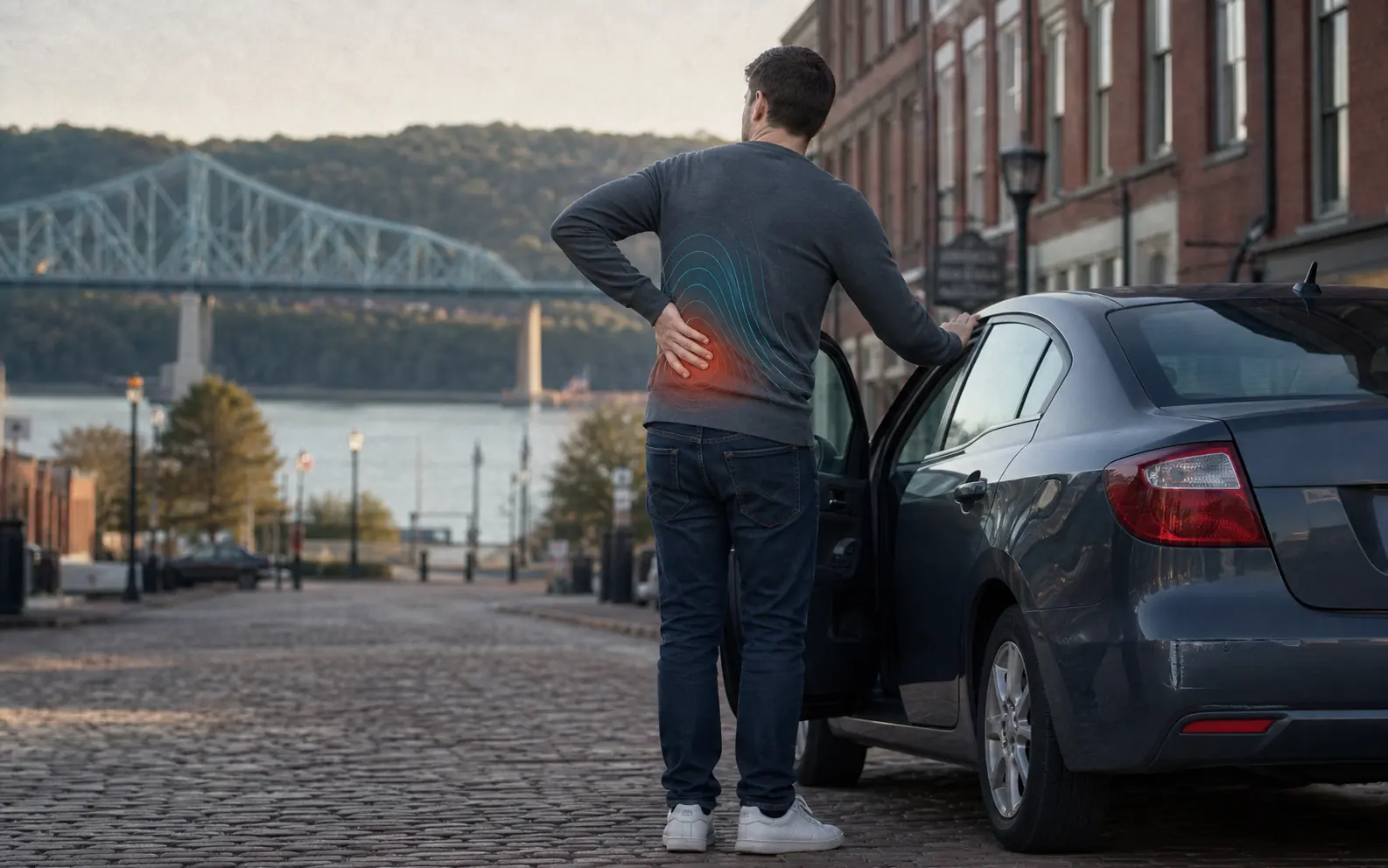
Then you sit down that evening and your low back tightens. The next morning, putting on socks is no longer automatic. You can be honest about both parts: the vehicle damage looked limited, and your movement changed afterward.
You do not need to exaggerate one to make the other believable.
Why is “low speed” a poor medical conclusion?
“Low speed” is usually a rough description, not a clinical finding. People use it to describe traffic conditions, visible damage, or an estimate made after the fact. None of those checks your strength, sensation, walking, range of motion, or tenderness.
Vehicle repair and human evaluation answer different questions. A bumper may be designed to handle certain contact. A repair estimate may focus on parts and labor. Neither tells a clinician whether you can sit for 30 minutes, lift a grocery bag, or get out of bed without bracing.
The reverse is also true. Pain after a minor-looking crash does not by itself prove a particular injury or establish that every symptom came from the event. History, prior health, later activity, examination, and sometimes imaging all help build the answer.
What low-back details are more useful than a speed estimate?
Start with the activity that exposed the problem.
- Did the discomfort begin while standing at the scene, driving home, sitting later, sleeping, or bending the next day?
- Is it centered, one-sided, or traveling into the buttock or leg?
- Does sitting, standing, walking, coughing, bending, or lifting change it?
- Is there numbness, tingling, weakness, or no leg symptom?
- What could you do normally before the collision that is different now?
- Did you have prior low-back symptoms, and if so, how does this compare?
Prior history is not a trap. It is part of an accurate baseline. “I had an occasional ache after yard work, but this is a constant right-sided pull with sitting” is much more informative than pretending your back had never spoken before.
Which back-pain symptoms require urgent medical attention?
Seek urgent or emergency medical care for back-pain warning signs(opens in a new tab) such as major leg weakness, loss of bladder or bowel control, groin numbness, inability to walk safely, severe pain after significant trauma, fever with serious illness, or rapidly worsening neurological symptoms.
For a new or persistent non-emergency concern, call an appropriate provider and describe the symptoms. Do not wait for an insurer, coworker, or repair shop to decide whether a health evaluation is appropriate.
What can an evaluation tell you that a car photograph cannot?
An evaluation can compare motion, strength, sensation, reflexes when appropriate, walking, position tolerance, and functional tasks. It can review the symptom timeline and prior history. It can also identify reasons to refer for medical evaluation or imaging such as a musculoskeletal MRI(opens in a new tab).
The examination findings should determine whether testing, referral, monitoring, or care is appropriate.
At Portsmouth Accident & Injury Center, a non-emergency car accident injury evaluation is meant to establish a baseline and decide what fits the clinic’s scope. There should be no predetermined promise about the number of visits or the outcome. If pain travels down a leg, our disc and nerve pain guide explains which changes are helpful to mention. A short answer about injuries in lower-speed crashes covers the speed question directly.
Should you rest until the back pain disappears?
There is no universal instruction that fits every post-crash back complaint. Follow the advice from a clinician who has evaluated you. Avoid forcing a movement or copying an online exercise simply because it has a reassuring thumbnail.
It can help to write down ordinary activity limits, without repeatedly provoking the pain:
- Comfortable sitting time before you change position
- Walking distance or time
- Ease of getting into and out of a vehicle
- Sleep position and interruptions
- Ability to dress, work, or manage stairs
These measures give a later reassessment something concrete to compare. Our guide to what a reassessment should reassess shows how progress can be measured without chasing a perfect pain score.
What does a reasonable care plan look like?
It begins with a safety screen and baseline. It states what is being addressed, what the first goals are, how progress will be checked, and what would trigger referral or a change in plan.
For one person, the early goal may be tolerating the drive to work. For another, it may be putting on shoes or sleeping without repeatedly changing position. Those goals are more accountable than “come three times a week until further notice.”
Ask how home guidance fits the examination, how the clinic will communicate with another provider, and when the first reassessment will occur. If the answer is vague, ask again.
A small Portsmouth driving note
Routes around US-23, US-52, Chillicothe Street, and the bridge approaches can turn a short trip into a longer seated stretch. Before a necessary drive, check your mirror and seat setup while parked. Do not change your position so much that you lose safe control of the vehicle.
Use OHGO(opens in a new tab) for current Ohio traffic information if a delay would materially extend the trip. If your symptoms or medication make driving unsafe, arrange another ride.
Questions people ask about lower-speed crashes
Related guides
- Back painSee how the location, timing, and movement changes help describe back pain after a crash, along with symptoms that require urgent medical attention.
- Chiropractic care explainedLearn how a chiropractic evaluation works, which care options may be discussed, and when referral or another approach may fit better.
- What a reassessment should actually reassessA reassessment should compare symptoms, function, findings, goals, safety, and plan—not simply reset a visit counter.
For care questions, start with car accident care after a collision or chiropractic care in Portsmouth for an everyday concern.
This page provides general information. It cannot diagnose an injury or replace emergency or medical care.