Why muscle spasms can start hours after a collision
Published by Portsmouth Accident & Injury Center.
Muscles may tighten, twitch, or feel as if they are "grabbing" long after the crash scene is over. That delay can reflect changing activity, guarding, fatigue, irritation, stress, or something else entirely. "Spasm" describes what you feel; it does not identify the injured structure. Write down the pattern, watch for warning signs, and let an appropriate evaluation work out the next step.
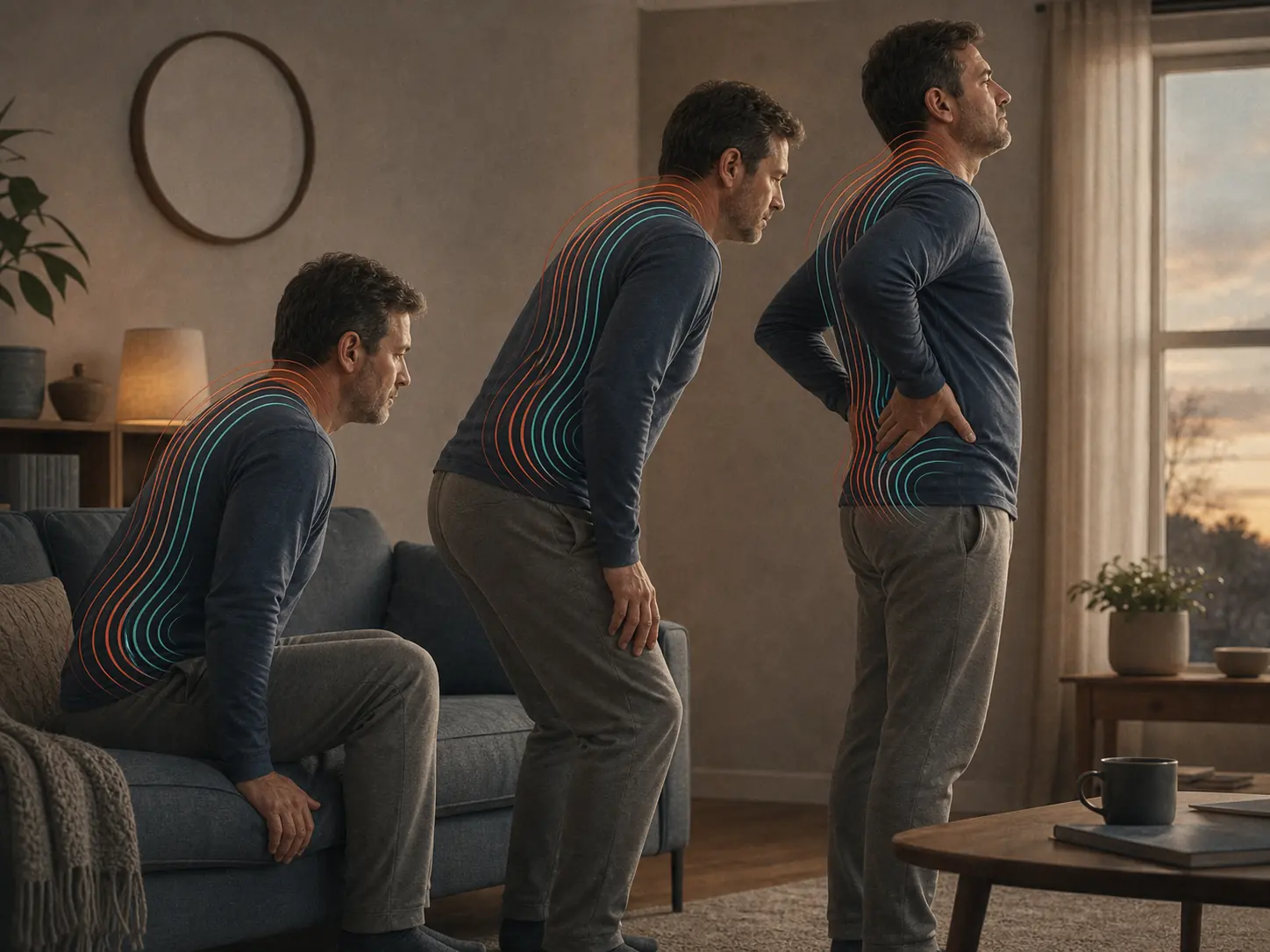
The first spasm often arrives during an unremarkable moment. You bend to move a laundry basket. You turn from the kitchen counter. You sit down after hours of calls. The low back locks for a few seconds, or the muscles beside the neck start to pulse.
That experience is real even when you cannot name it. In fact, naming it too quickly can get in the way.
What does "muscle spasm" mean after a crash?
People use the word for several sensations: a brief involuntary contraction, a sustained tight band, a cramp(opens in a new tab), repeated twitching, or a sudden catch that makes them stop moving. Tell the clinician which one you mean.
Try a sentence with four parts:
> The right side of my low back grabbed for about ten seconds when I stood from the couch, then stayed tight for twenty minutes.
That gives location, duration, trigger, and aftermath. "My back is in spasm" leaves all four unanswered.
Why might the sensation wait until later?
Your activity changes after a collision. At the scene you may stand, then sit in a vehicle, then spend a long stretch on the phone. You may move cautiously, sleep differently, or tense muscles around a sore area. What becomes noticeable at home may not have been obvious beside the roadway.
Delayed symptoms are discussed in more detail in our guide to soreness after the crash scene. The key point is that delay does not prove a cause, and it does not make the symptom imaginary.
Which details help an evaluation?
Keep a short note for a day or two — not a minute-by-minute surveillance project. Worth jotting down:
- Area: neck, between the shoulder blades, low back, calf, or elsewhere
- Trigger: sitting, standing, walking, reaching, coughing, or no clear trigger
- Duration and frequency
- Whether the muscle visibly moves or only feels tight
- Symptoms between episodes
- Numbness, weakness, radiating pain, fever, swelling, or other changes
- Medication, hydration, sleep, and relevant prior history
If you can safely do so, note the task that stopped. "Had to pause halfway through putting on a shoe" is a measurable baseline, and it will still make sense to you in three weeks.
When is a spasm not a wait-for-an-office-call problem?
A forceful massage or aggressive stretch is not a safety screen. Neither is a video exercise labelled "instant relief."
What should a Portsmouth evaluation do?
For a non-emergency musculoskeletal complaint, an auto-injury evaluation should connect what you describe to motion, function, neurological findings where relevant, your history, and whether a referral is needed. It should ask whether the episodes are changing and what happens between them.
If a plan is appropriate, the first goal might be easier transitions from sitting to standing, a longer comfortable walk, or fewer interruptions during sleep. "Stop every spasm immediately" is not a responsible promise, and low-back complaints in particular(opens in a new tab) rarely resolve on a schedule anyone can name in advance.
Quick questions about post-crash spasms
Related guides
- Muscle spasmsLearn how to describe muscle tightness or spasms after a Portsmouth crash and which warning signs need medical care.
- Car accident careSee how the office evaluates non-emergency symptoms after a crash, documents findings, and decides when a medical referral is needed.
- Delayed soreness after a car accidentA careful explanation of delayed soreness that avoids the one-word adrenaline claim and focuses on timing, function, and warning signs.
For care questions, start with car accident care after a collision or chiropractic care in Portsmouth for an everyday concern.
This page provides general information. It cannot diagnose an injury or replace emergency or medical care.