Chest and rib pain after a crash — seat-belt bruising or a reason for urgent care?
Published by Portsmouth Accident & Injury Center.
Chest pain is not the place for the phrase "probably nothing."
It is also not useful to decide that every tender rib means a life-threatening injury. The right move sits between those extremes: check for urgent features, get appropriate medical guidance, and describe the pattern clearly.
What can make the chest or ribs sore after a collision?
The shoulder belt crosses the chest. The torso may also tense, twist, or contact part of the vehicle. A clinician may consider skin and soft-tissue bruising, muscle irritation, rib or cartilage injury, and non-musculoskeletal causes involving the heart, lungs, or other organs.
An article cannot sort those out. Even a visible diagonal bruise only tells you what is visible at the skin. It does not show what is happening underneath.
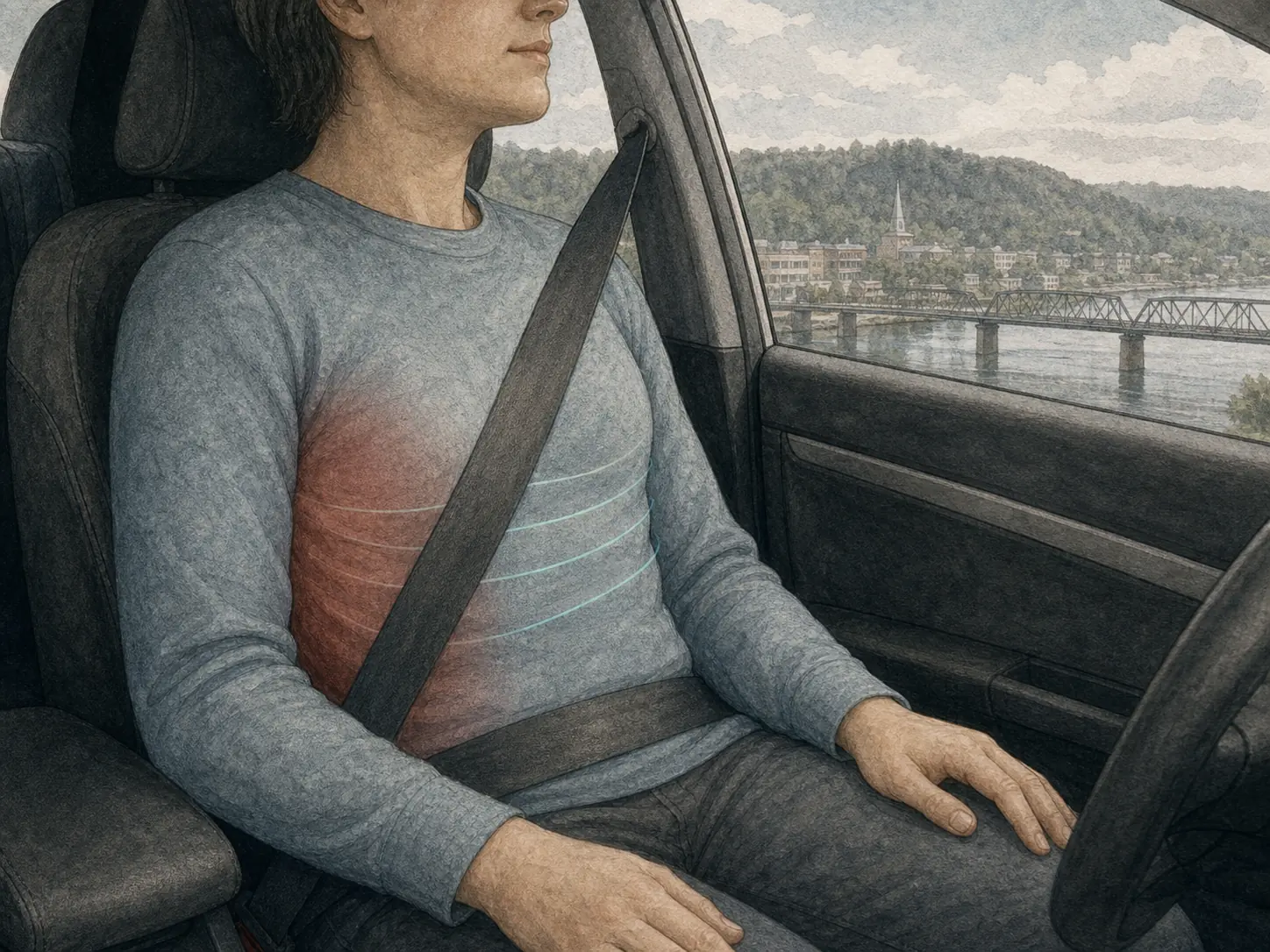
When should chest pain go straight to emergency care?
Prompt medical attention is also appropriate for significant abdominal pain, increasing swelling, or a new pattern that concerns you. If you are unsure whether the symptom is an emergency, choose safety and get qualified medical guidance — chest pain has a long list of possible causes(opens in a new tab) and several of them are serious.
Do not wait for a chiropractic office to open, an adjuster to return a call, or a bruise to become more obvious.
Which details help a medical evaluation?
Describe the symptom without trying to name the damaged tissue:
- Exact area: centre chest, one side, along a rib, collarbone, or upper abdomen
- Quality: sore to touch, sharp with a breath, pressure, burning, or another sensation
- Trigger: deep breath, cough, twist, arm reach, lying down, walking, or no clear trigger
- Timing: immediate, later that evening, overnight, or the next day
- Visible change: bruise, redness, swelling, or no visible mark
- Associated symptoms: shortness of breath, dizziness, nausea, sweating, weakness, abdominal pain, or none
If you photograph a bruise, use natural light, include the date, skip filters, and keep the image secure. Never delay care to create a better record.
Does pain with a deep breath prove a rib injury?
No. It is an important detail, but it does not establish the cause. Chest wall and rib problems can hurt with breathing, and so can other things that need medical assessment.
This is why the online self-test is a bad bargain: you trade a real answer for a fake one. Pressing hard on the area, wrapping the chest tightly, or repeating a painful breath does not safely rule anything in or out.
What role can chiropractic care have?
Chiropractic care is not emergency chest care. A chiropractor should screen, recognise scope limits, and refer chest or rib concerns that require medical assessment.
After urgent conditions have been addressed, a person may still have non-emergency neck, back, shoulder, or movement complaints. An appropriate musculoskeletal evaluation can consider those separately. Our page about chest and rib symptoms after a car accident states that boundary directly.
How does the shoulder fit into the picture?
The diagonal belt may leave the shoulder, collarbone, chest, and neck feeling like one large sore area. Separate the functions:
- Can you lift the arm overhead?
- Can you reach across the chest?
- Does the chest hurt when the shoulder moves?
- Does discomfort travel down the arm?
- Is there new numbness, weakness, or grip change?
Those answers help the evaluator decide whether the main question is chest, shoulder, neck, or a combination. Read the seat-belt soreness guide for a simple body-map method.
What should you do with discharge instructions?
Keep them in your crash folder and follow them. Note restrictions, medication directions, follow-up recommendations, and return precautions. If the symptom changes in a way the instructions identify as urgent, act on that instruction.
If you do not understand a term, call the issuing provider. A search result is not a safe substitute for clarification.
Common questions about rib and chest soreness
Related guides
- Chest and rib painChest pain after a crash can be urgent. Learn the emergency signs, what to report, and when a later musculoskeletal question may be appropriate.
- Shoulder and seat belt injuriesNotice changes in shoulder movement, belt-area soreness, bruising, chest symptoms, and breathing after a crash.
- Seat-Belt Soreness After a Portsmouth Car AccidentLearn what to watch after seat-belt soreness, when chest or breathing symptoms need urgent care, and how to make a clear symptom record.
For care questions, start with car accident care after a collision or chiropractic care in Portsmouth for an everyday concern.
This page provides general information. It cannot diagnose an injury or replace emergency or medical care.