Seat-belt soreness after a Portsmouth car accident
Published by Portsmouth Accident & Injury Center.
A seat belt reduces the risk of severe injury. But soreness or bruising may still happen after a crash. Keep track of the symptoms. Seek medical care for chest, belly, breathing, or other warning signs.
You may notice a tender line near the collarbone while changing clothes. The edge of the lap belt may feel sore when you stand. A shoulder may hurt when you reach into a cabinet. The right response is not panic, and it is not brushing it off. It is a clear check of location, breathing, movement, look, and change over time.
Where can seat-belt soreness show up?
The diagonal portion typically crosses the shoulder and chest. The lap portion should sit low across the hips and upper thighs rather than the stomach. Depending on position and crash forces, a person may notice symptoms around the:
- Shoulder or collarbone area.
- Front or side of the chest.
- Ribs.
- Lower abdomen.
- Hip or upper-thigh area.
Make a simple body map. Use one mark for tenderness, another for visible bruising, and a note for motions that change the feeling. Do not press hard on an area to “test” it, and do not keep recreating a painful movement for the camera.
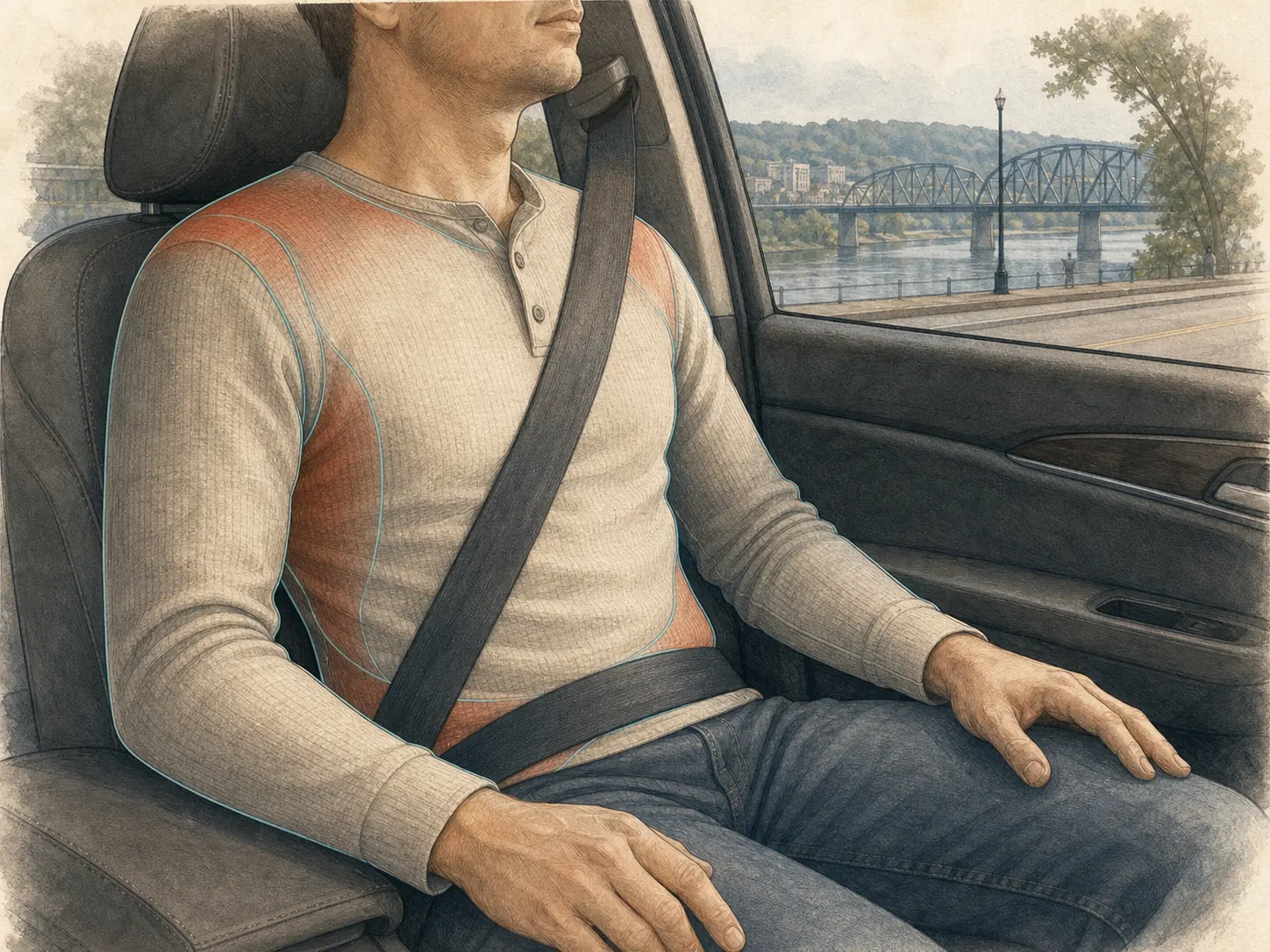
When is chest or abdominal soreness more than something to watch?
A colored mark on the skin cannot tell you what is happening underneath it. Also, no bruise does not rule out a problem. If you are unsure how urgent it is, get medical guidance — MedlinePlus explains when chest pain needs emergency care(opens in a new tab). Do not rely on a blog photo or pain scale.
This is the point where the phrase “just seat-belt soreness” becomes unhelpful. “Just” closes the question before anyone has asked about breathing, severity, timing, abdominal symptoms, or the collision.
How do you make a useful seat-belt symptom record?
Take photographs only in a private setting and only if they are useful to you. Include the date and avoid filters. Then write:
- The first time you noticed the mark or soreness.
- Its general location and whether the area changed.
- Whether a deep breath, cough, twist, reach, or walk changes it.
- Whether shoulder motion is limited.
- Whether you have breathing, dizziness, belly, or nerve symptoms.
- The clinician you contacted and any instructions you received.
Keep the original photograph. Repeatedly messaging compressed screenshots can strip useful date information. Store personal health images securely and ask before sending them anywhere.
The one-folder crash record is designed for this kind of ordinary but easily scattered information. If a Scioto County deputy responded to your crash, the Scioto County Sheriff's Office(opens in a new tab) is the agency to ask about the crash report.
Does seat-belt soreness mean the belt was positioned wrong?
Not always. Soreness alone cannot tell you how the belt sat or how the crash happened. The National Highway Traffic Safety Administration's seat-belt guidance(opens in a new tab) says to place the shoulder belt across the middle of the chest and away from the neck. The lap belt should sit across the hips, not the stomach. The belt should not go behind the back or under the arm.
If you are reviewing the event, describe only what you honestly remember. Do not convert a tender area into certainty about exactly how the belt moved.
Continue to use a properly positioned seat belt. This article explains how to respond to symptoms; it does not argue against restraint use.
What if the main problem is the shoulder?
A shoulder complaint needs its own description. Can you raise the arm overhead? Reach across your body? Put on a jacket? Does the pain stay at the shoulder, move toward the neck, or run down the arm? Is there weakness, numbness, swelling, or a change in grip?
Those distinctions help an appropriate provider decide what to examine and whether referral or imaging may be needed. Our shoulder-pain guide explains why “the seat belt caught me” is a starting point, not the entire evaluation. When symptoms reach past the shoulder, our arm and hand pain guide explains what to note.
If symptoms center on breathing, severe chest pain, or other urgent signs, this is not a shoulder-care question. Use emergency medical care.
What should a careful evaluation avoid?
It should not name a treatment package before taking the history. It should not claim that every bruise proves a deeper injury, or that no bruise means nothing happened. It should not let a chiropractic visit replace medical care outside chiropractic scope.
A good evaluation should screen for referral. It should separate chest and rib concerns from shoulder and neck movement concerns. It should record a baseline and explain the next step in plain words. If care begins, ask the nine questions worth asking before a plan.
Questions people ask about seat-belt marks
Related guides
- Shoulder and seat belt injuriesNotice changes in shoulder movement, belt-area soreness, bruising, chest symptoms, and breathing after a crash.
- Chest and rib painChest pain after a crash can be urgent. Learn the emergency signs, what to report, and when a later musculoskeletal question may be appropriate.
- Build a one-folder crash recordOrganize police, insurance, vehicle, medical, work, expense, and contact records in one practical system.
For care questions, start with car accident care after a collision or chiropractic care in Portsmouth for an everyday concern.
This page provides general information. It cannot diagnose an injury or replace emergency or medical care.